


Straight hair and a mid taper fade might be the most underrated combination in men’s grooming right now. The clean, gradual blend pairs perfectly with straight strands because there’s no curl pattern to fight against, just crisp lines and natural shine. If you’re searching for a cut that looks sharp on day one and still holds its shape three weeks later, the mid taper fade for straight hair deserves a serious look.
This guide breaks down what the cut actually is, why it works so well in 2026, twenty style variations to bring to your barber, and everything you need to know about maintaining it between visits.
Visual Guide: Mid Taper Fade for Straight Hair
Picture the sides and back of the head gradually shortening from about mid-way between the temple and the ear line down to the nape, rather than starting high near the crown or low near the ear. On straight hair, that gradient reads as a sharp, almost architectural line because the hair lies flat and doesn’t scatter light the way curls or waves do. The top stays longer and is left open to nearly any styling direction, from a soft quiff to a textured crop.
What Is a Mid Taper Fade for Straight Hair?
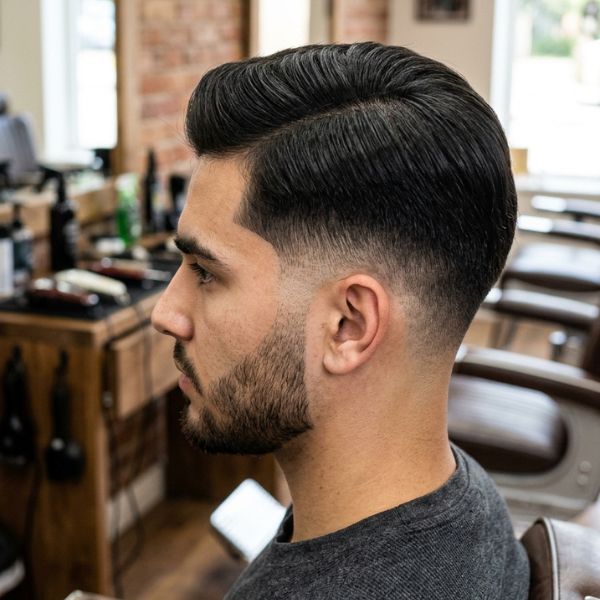
A mid taper fade sits between a low fade and a high fade. The blend typically starts around the middle of the side of the head, roughly level with the temple, and tapers down toward the skin or a very short guard length near the hairline. It’s a middle-ground fade, not as dramatic as a high skin fade and not as understated as a low fade.
On straight hair specifically, this cut looks noticeably cleaner. Straight strands lie in one direction with minimal natural volume, so the transition zones a barber creates are easy to see and easy to keep sharp. There’s no frizz or curl coil to soften the line, which is exactly what gives this cut its polished, “fresh out of the chair” appearance for weeks at a time.
Why This Cut Works So Well for Straight Hair in 2026
Several grooming trends have converged to make the mid taper fade one of the most requested cuts of the year.
- Precision blending. Straight hair shows off a barber’s clipper work more clearly than textured hair, so the mid fade’s gradient looks crisper and more intentional.
- Low upkeep between cuts. Because the fade starts mid-height rather than low, it grows out more gracefully, giving you an extra week or two before it needs a refresh.
- Balance for most face shapes. The mid-level starting point avoids the extreme visual height of a high fade while still adding structure that a low fade sometimes lacks.
- Styling flexibility on top. Straight hair holds a defined part, a slick back, or a textured quiff without much product, so the top length can change with your mood while the fade stays constant.
- Professional-casual crossover. It reads as polished enough for the office yet edgy enough for a night out, which is why it keeps showing up across both corporate and streetwear style guides this year.
20 Best Mid Taper Fade Styles for Straight Hair
Mid Taper Fade Straight Hair: Blowout & Volume Styles
1. Mid Taper Fade Blowout Straight Hair
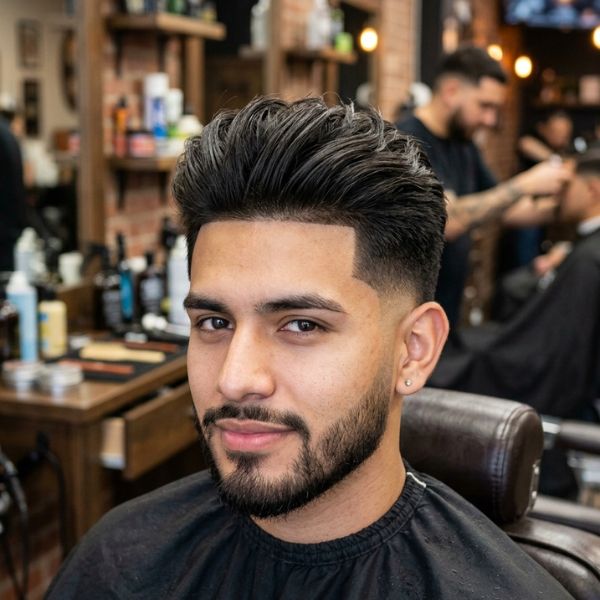
The blowout pushes volume straight up from the roots using a round brush and a blow dryer on a cool setting, creating height that contrasts beautifully with the tight mid fade underneath. It works best on hair that’s at least three inches long on top and suits round or square faces that benefit from added vertical length.
Read more: Mid Taper Fade Buzz Cut: Styles, Clippers & At-Home Guide (2026)
Mid Taper Fade Straight Hair with Fringe
2. Mid Taper Fade Fringe Straight Hair

A soft, forward-swept fringe sits just above the eyebrows, softening angular features while the mid fade keeps the sides tidy. This one is popular with younger men and anyone wanting a slightly boyish, effortless finish.
3. Mid Taper Fade Textured Fringe Straight Hair
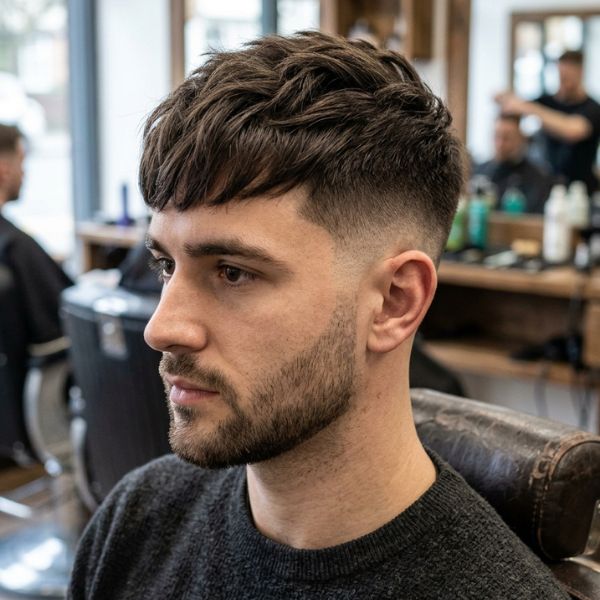
Take the same fringe and add texture with a matte clay or texturizing powder to break up the strands into piece-y sections. It photographs well and adds movement that a blunt fringe alone can’t achieve.
Short & Long Mid Taper Fade Styles
4. Mid Taper Fade Short Hair Straight
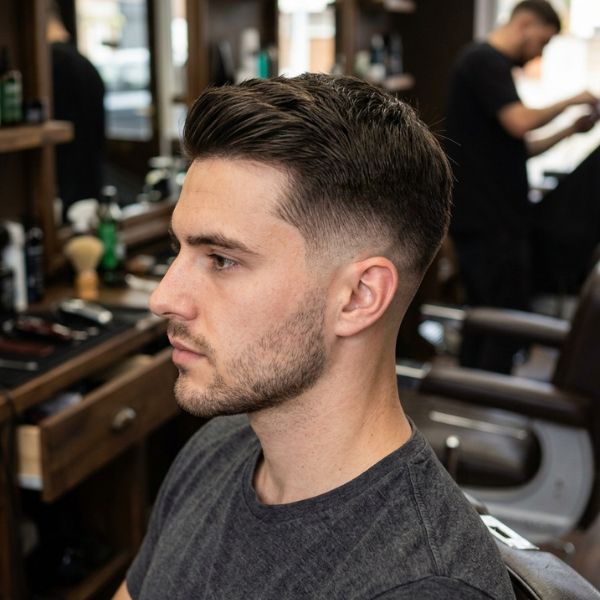
Keeping the top under two inches creates a low-maintenance, sporty look that still shows off the fade’s clean blend. It’s ideal for gym-goers or anyone who wants a wash-and-go routine.
5. Mid Taper Fade Long Hair Straight
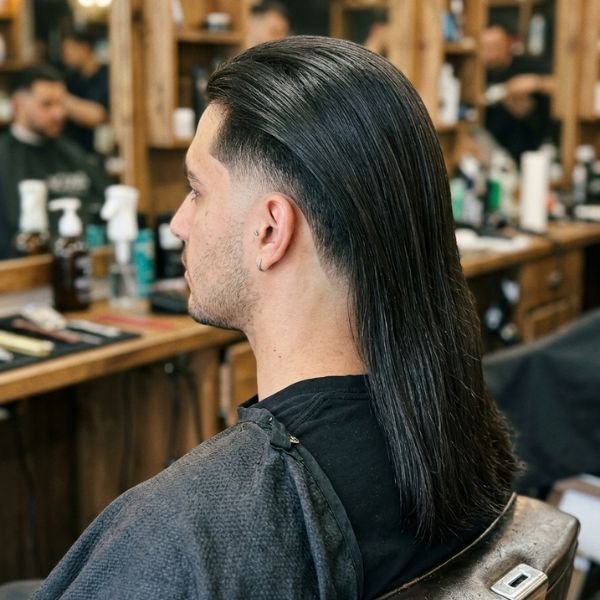
On the opposite end, letting the top grow to four or five inches gives you enough length for a slick back, a man bun, or loose waves, while the mid fade keeps the overall silhouette controlled.
Read more: 10 Best Mid Taper Fade with Design Ideas for Men (2026)
Blonde Mid Taper Fade Styles
6. Mid Taper Fade Blonde Straight Hair
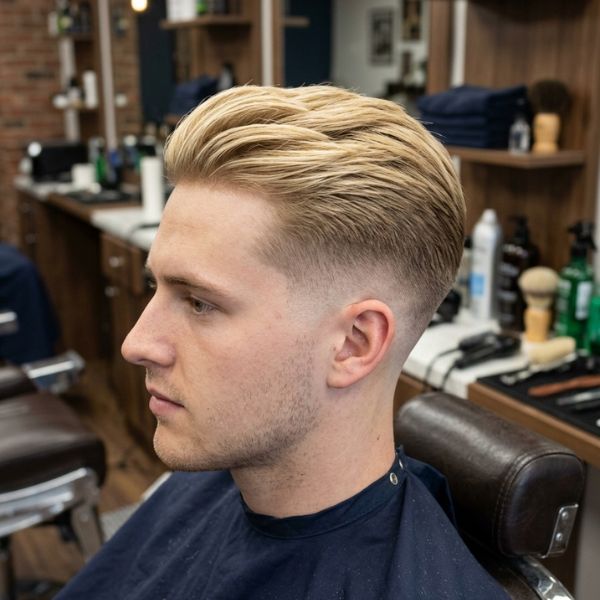
A full or partial bleach job on top paired with a mid fade creates strong tonal contrast against the darker, natural-colored sides. It’s a bold statement cut, so budget for regular toner refreshes to keep the blonde from turning brassy.
Burst, Drop & Skin Fade Combos for Straight Hair
7. Mid Taper Burst Fade Straight Hair

The burst fade curves around the ear in a semi-circle rather than running in a straight line, which softens the transition and works especially well when paired with longer, swept-back top styles.
8. Mid Taper Drop Fade Straight Hair

Here, the fade line dips lower behind the ear and toward the nape, following the natural curve of the skull. It adds extra dimension and is a favorite for men who want their fade to look less uniform and more sculpted.
Buzz Cut & Low Mid Taper Combos
9. Mid Taper Fade Buzz Cut Straight Hair
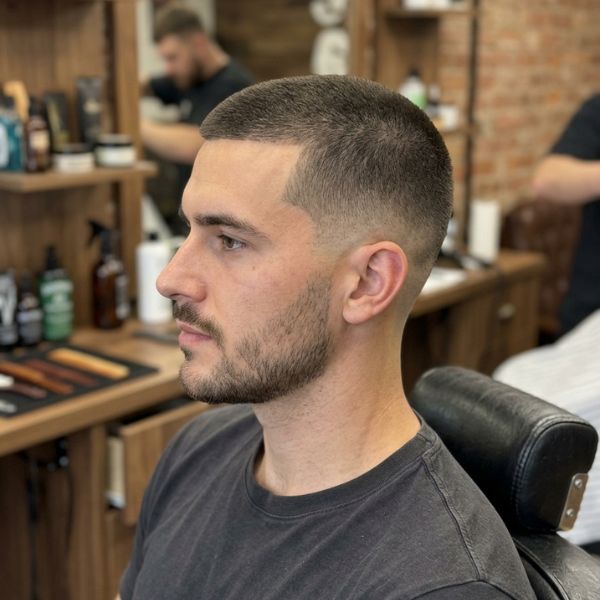
A uniform buzz length on top, usually a size two or three guard, blended into a mid fade gives a clean, no-fuss look that needs almost no daily styling.
10. Low Mid Taper Fade Straight Hair
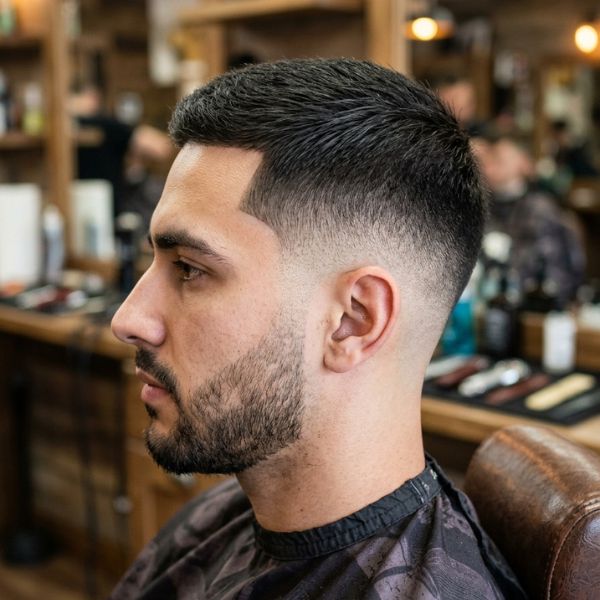
This variation starts the blend just slightly lower than a standard mid fade, offering a more subtle transition for men who want the mid fade’s structure without as much contrast.
Slick Back, Beard & French Crop Styles for Straight Hair
11. Mid Taper Fade Slick Back Straight Hair

Straight hair slicks back exceptionally well with a pomade or gel, creating a sharp, formal look that pairs naturally with business attire while the mid fade keeps the sides from looking bulky.
Read more: Mid Taper Fade avec frange : Guide complet des styles et des longueurs (2026)
12. Mid Taper Fade with Beard Straight Hair
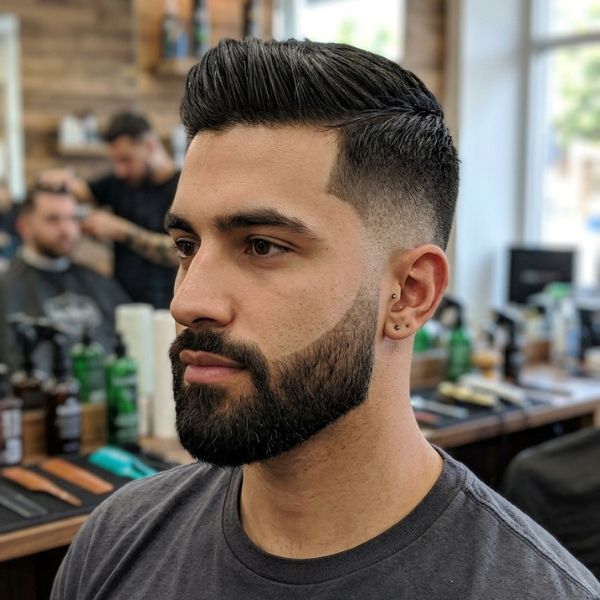
Connecting the fade into a well-groomed beard creates one continuous, intentional line from the sideburns down to the jaw. Ask your barber to blend the two together in the same session for the cleanest result.
13. French Crop Mid Taper Fade Straight Hair

The French crop keeps the top short and blunt with a straight-across fringe, and it’s one of the most requested combinations of the year for men who want something modern without much daily maintenance.
Design, Fluffy & Middle Part Styles for Straight Hair
14. Mid Taper Fade with Design Straight Hair

A shaved line, geometric pattern, or small motif cut into the fade adds a personal, artistic touch. Straight hair makes the lines of a design especially crisp since there’s no texture to blur the edges.
15. Mid Taper Fade Fluffy Straight Hair

A longer, loosely styled top with minimal product creates a soft, “bedhead” texture that contrasts nicely with the precision of the fade beneath it.
16. Mid Taper Fade Middle Part Straight Hair

The middle part has stuck around as a trend for several years now, and it works especially well with straight hair, which naturally falls into two clean sections without much effort.
Mid Taper Fade for Asian Straight Hair
17. Mid Taper Fade Straight Hair Asian
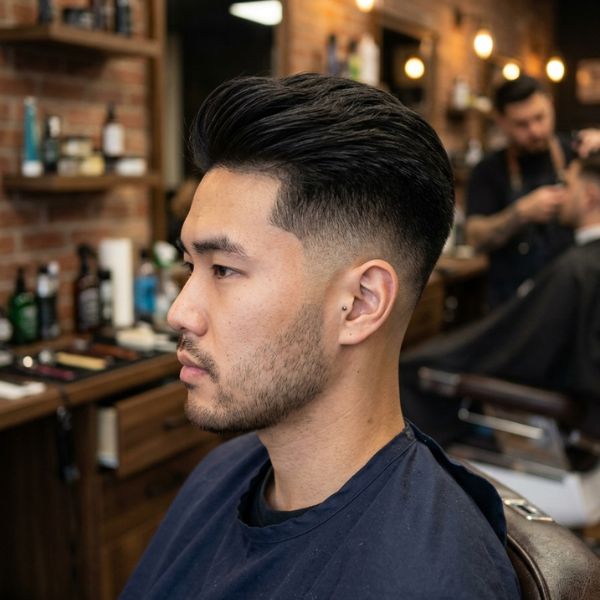
Naturally thick, straight hair, common among many Asian men, holds shape and volume exceptionally well, making styles like a textured quiff, side part, or two-block cut especially striking with a mid fade base.
Additional Mid Taper Fade Variations
18. Two Block Mid Taper Fade Straight Hair
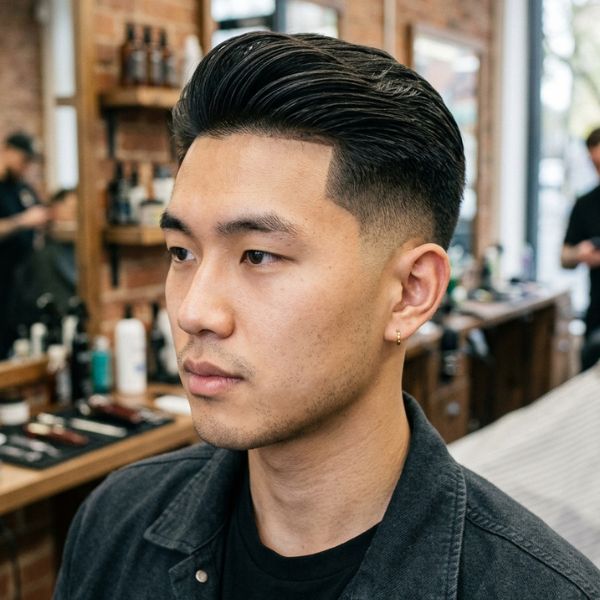
Borrowed from Korean street style, the two-block cut keeps the top notably longer than the sides, with a mid fade providing the tapered transition rather than a sharp shaved line.
19. Mid Taper Fade Quiff Straight Hair

A classic quiff swept up and back at the front adds height and a slightly retro edge, and it’s one of the most versatile top styles to pair with a mid fade for both casual and dressed-up occasions.
20. Mid Taper Fade Curtains Straight Hair

Curtains part the top down the middle and sweep both sides outward, framing the face. Straight hair holds the curtain shape cleanly without the flipping or frizzing that wavy hair sometimes shows.
How to Ask Your Barber for a Mid Taper Fade
Key Phrases to Use With Your Barber
Tell your barber you want “a mid fade starting around the temple” rather than just “a taper,” since taper alone can mean anything from a subtle trim to a dramatic fade. Mention your desired top length in inches, your preferred top style, and whether you want the fade to connect into a beard.
The Guard Number Blending Sequence
Most barbers build a mid fade using a sequence of guard lengths, moving from a longer guard at the top of the fade zone down to a shorter one near the hairline, often finishing with clippers over comb or a razor for the cleanest edge. A typical sequence might move from a number three or four down through a one and a half, then a zero or skin finish at the base, blended with repeated passes so no visible lines remain.
Common Mistakes to Mention
Ask your barber to avoid leaving a harsh, visible line between the fade zones, which is more noticeable on straight hair than on textured hair. Also mention if you’ve had uneven blending in the past, since straight hair reveals inconsistent clipper work more readily than curlier textures.
Common Mid Taper Fade Mistakes to Avoid
- Going too long between trims. A mid fade starts to look shaggy and lose its shape once it grows out past roughly four weeks for most men.
- Skipping the blend touch-up. Even if the top doesn’t need much work, the fade itself often needs a quick refresh every two to three weeks to stay sharp.
- Overloading straight hair with heavy product. Straight hair can go greasy-looking fast, so a little product goes a long way compared to thicker or curlier textures.
- Choosing the wrong top length for your face shape. A top style that’s too flat or too tall can throw off the balance the fade is meant to create.
- Not communicating clearly with a new barber. Bring a reference photo every time, since “mid fade” can be interpreted differently from one barber to another.
How to Maintain a Mid Taper Fade for Straight Hair
Touch-Up Schedule
Plan for a fade refresh every two to three weeks and a full haircut, including top length adjustment, every four to six weeks. Straight hair tends to grow in a way that makes the fade line soften faster than the top style, so many men book a quick fade-only appointment between full cuts.
Daily Styling Routine
Wash with a gentle shampoo two to three times a week rather than daily, since over-washing can strip straight hair of the natural oils that help it hold texture. Apply product to slightly damp hair for the most even distribution, and use a comb or brush to direct the top into shape before it fully dries.
Products That Work Best
- Matte clay or paste for textured, piece-y finishes with low shine.
- Pomade for slick backs and polished, high-shine looks.
- Sea salt spray to add grit and texture to longer top styles.
- Lightweight styling cream for natural, low-hold everyday looks.
- Texturizing powder to add volume at the root on finer straight hair.
Best Mid Taper Fade for Straight Hair by Face Shape
Oval Face
Almost any top length and style works well here, since the oval face shape is naturally balanced. A classic quiff or textured crop tends to be the most flattering default choice.
Round Face
Add height on top with a blowout or quiff to visually elongate the face, and keep the sides tight to avoid adding width.
Square Face
Softer, textured styles like a fluffy top or a loose fringe help balance a strong jawline without competing with it.
Heart-Shaped Face
A side-swept fringe or curtains draw attention away from a wider forehead and narrower chin, creating a more even overall silhouette.
Best Mid Taper Fade Styles by Age Group
Teenagers
Buzz cut combos and simple textured crops are popular, low-maintenance choices that suit a busy school schedule and still look current.
Young Men
Bolder choices like a burst fade, a design, or a blonde top tend to be more common, since this age group often has more flexibility for statement styles.
Professional Men
Slick backs, low mid fades, and classic middle parts remain the go-to picks for anyone who needs a polished look that transitions easily from the office to evening plans.
Mid Taper Fade vs Other Fades for Straight Hair
Mid Taper Fade vs Low Taper Fade

The low taper fade starts its blend closer to the ear, offering a subtler transition, while the mid taper fade starts higher and creates noticeably more contrast and definition.
Mid Taper Fade vs High Taper Fade
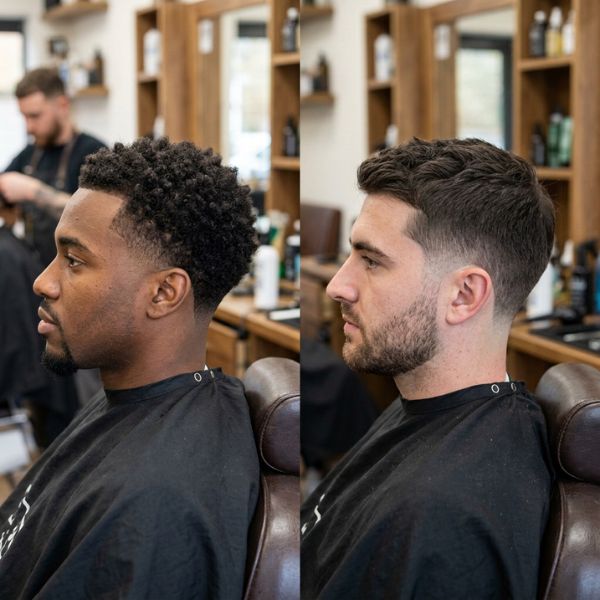
A high taper fade begins near the crown, drawing more attention upward and creating a bolder, more dramatic look than the mid fade’s balanced approach.
Mid Taper Fade vs Skin Fade

A skin fade takes the sides down to bare skin at the base, while a mid taper fade can finish at skin or at a very short guard length, giving it a slightly softer, less severe finish overall.
Frequently Asked Questions
Does a mid taper fade work on fine straight hair? Yes, fine straight hair actually shows the fade’s clean lines exceptionally well, though a texturizing powder can help add the illusion of extra density on top.
How often should I get my mid taper fade trimmed? Most men schedule a touch-up every two to three weeks and a full cut every four to six weeks to keep the shape sharp.
Can I do a mid taper fade at home? It’s possible with clippers and guards, but the smooth blending that makes this cut look professional is difficult to replicate without training, so a barber visit is strongly recommended.
Is a mid taper fade good for a receding hairline? Yes, since the fade draws attention to the sides and back rather than the hairline itself, and a textured or fringed top style can help soften the hairline’s appearance.
What’s the difference between a taper and a fade? A taper gradually shortens hair without reaching the skin, while a fade blends all the way down to skin or a very short guard, and a “taper fade” combines both techniques.
Conclusion
The mid taper fade earns its popularity in 2026 by striking a balance that few other cuts manage: sharp enough to look deliberate, subtle enough to suit nearly any setting, and remarkably well suited to the clean lines that straight hair naturally produces. Whether you lean toward a buzzed, low-maintenance version or a longer, styled top with a quiff or curtains, this cut adapts to your face shape, lifestyle, and personal style without losing its core identity. Bring a reference photo to your next barber appointment, describe the blend height clearly, and you’ll walk out with one of the most reliably sharp haircuts available this year.
About the Author
This guide was compiled using current barbering trends and grooming best practices for 2026, drawing on common techniques used by professional barbers when cutting and maintaining fades on straight hair textures.
Post Navigation
Looking for more style inspiration? Browse related guides on low fades, high fades, and face-shape-specific haircuts for men.

Reyansh is an experienced fashion writer with 6+ years of writing experience, passionate about fashion trends, styling ideas, and modern looks. He creates simple, engaging content that helps readers discover their personal style with confidence.