


A mid taper fade is already one of the most requested cuts at any barbershop, but adding a design turns a clean, safe haircut into a personal statement. A mid taper fade with design blends a taper that starts around temple height with a shaved line, shape, or pattern cut into the sides or back, giving the style an extra layer of detail without changing the overall shape of the cut.
It works for teenagers who want to stand out, young men experimenting with their look, and professionals who still want something sharp enough for the office. This guide walks through what the style actually is, why it has become so popular in 2026, ten design ideas worth showing your barber, and how to pick the right one for your hair type, face shape, and age.
What Is a Mid Taper Fade with Design?
A mid taper fade starts its blend around the temple area, roughly halfway between the hairline and the crown, which places it between a low taper and a high taper in terms of contrast. The sides gradually shorten from the top down to the guard length near the ear, using a blend of clipper guards such as a 1 to 3 or 2 to 4 fade depending on hair thickness and desired contrast.
The “design” part refers to a shaved detail cut into that faded section, usually with a clipper’s zero-gap blade or a T-liner. This can be a single straight line, a symbol, a name, or a full pattern. Barbers typically add the design after the fade is finished, using the fade itself as a clean background so the shaved lines stand out clearly.
Because the design sits directly in the fade, it needs enough contrast between the shaved area and the surrounding hair to actually be visible. That is why most designs work best on a mid or high taper rather than a very low one, where there simply is not enough shorter hair to frame the shape.
Why Mid Taper Fade with Design Is So Popular in 2026
Search interest in barbershop hair designs has kept climbing, and a few practical reasons explain why the trend has stuck around rather than fading out.
- Personalization without commitment. A design can be added or removed at the next appointment, so it lets a man try a bold look without a permanent change like a tattoo or a drastically different haircut.
- Social media visibility. Short-form video content from barbershops has turned intricate designs into shareable content, and clients now frequently bring in screenshots as reference photos.
- Wider barber skill availability. Freehand designs and hair tattoos used to be a specialty skill. In 2026, more barbers train specifically in linework and pattern cutting, so the style is easier to find at a standard shop.
- Cross-generational appeal. The mid taper itself is considered a safe, versatile base, which means the design sits on top of a haircut that already works for school, work, and everyday settings.
- Face-shape flexibility. Because the taper height and design placement can both be adjusted, the same general style can be tailored to nearly any face shape or hair type, which is unusual for a “trend” haircut.
Pros and Cons
| Pros | Cons |
|---|---|
| Adds a personal, distinctive detail to a common haircut | Shaved lines grow out faster than the surrounding taper |
| Works with straight, wavy, curly, and coily hair types | Requires more frequent barber visits to stay sharp |
| Can be simple (one line) or elaborate (full pattern) | Complex designs cost more and take longer to cut |
| Suits teens, young men, and many professional settings | Some workplaces or schools may have dress code restrictions |
| Easy to remove or change at the next cut | A design near the front is more visible day to day |
10 Best Mid Taper Fade with Design Ideas
The following ten ideas are grouped by style category, moving from the simplest options to the boldest ones, so you can gauge how much detail and upkeep you actually want before you sit in the chair.
Classic Line Designs
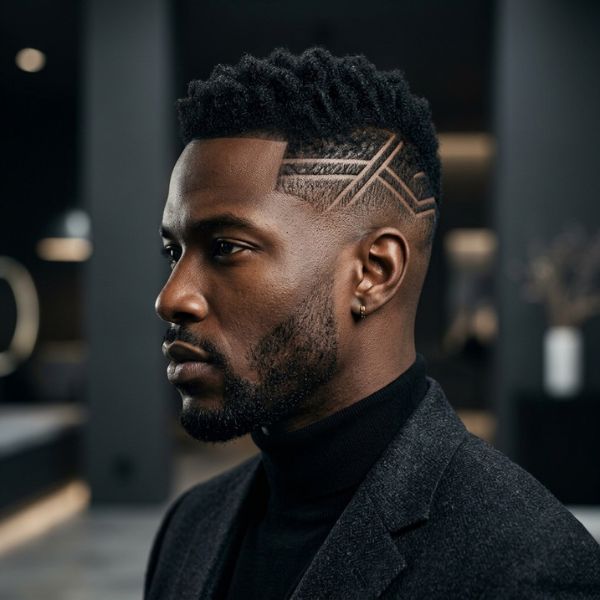
Line designs are the most requested starting point because they are quick to cut, easy for a barber to keep symmetrical, and simple to touch up.
1. Single Line Design
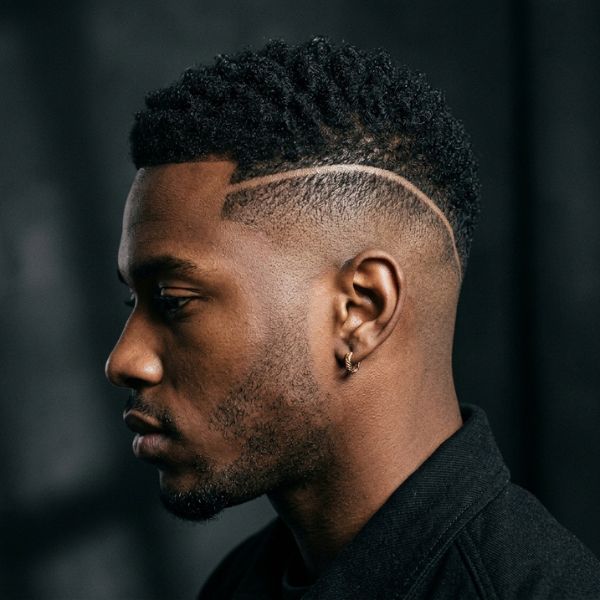
One straight or slightly curved shaved line, usually running from the temple toward the ear. It is the easiest design to execute cleanly, making it a strong first choice, and it blurs the least noticeably as hair grows back.
2. Double Line Design
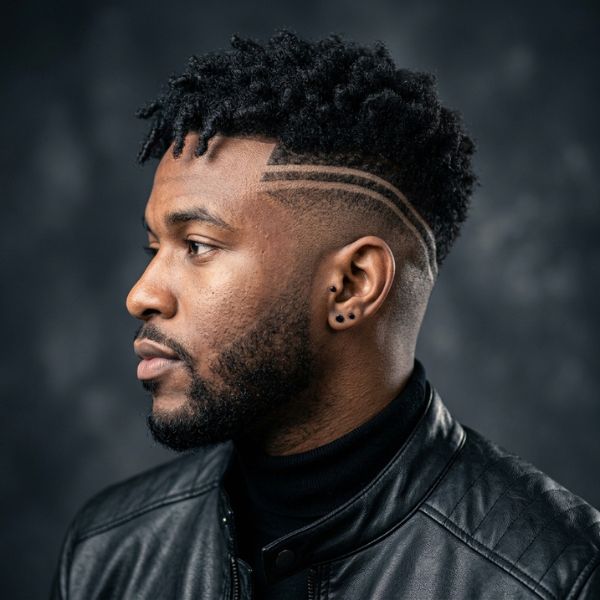
Two parallel lines add more visual weight than a single line while still being fast for a barber to replicate at each touch-up. Lines can run straight or curve to follow the taper’s shape.
3. Side Part Line Design
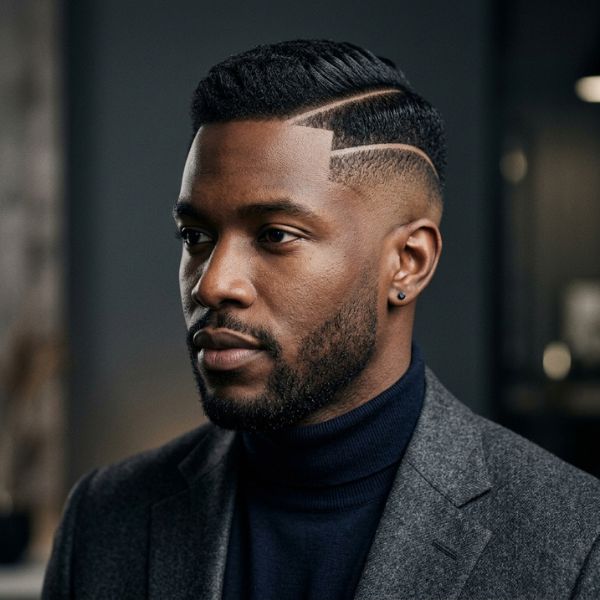
This line follows an actual hair part, separating the longer top section from the taper below it. It doubles as a styling guide and a design element, which is why it appeals to professional men who want subtle detail.
Read more: Mid Taper Fade avec frange : Guide complet des styles et des longueurs (2026)
Symbol & Shape Designs
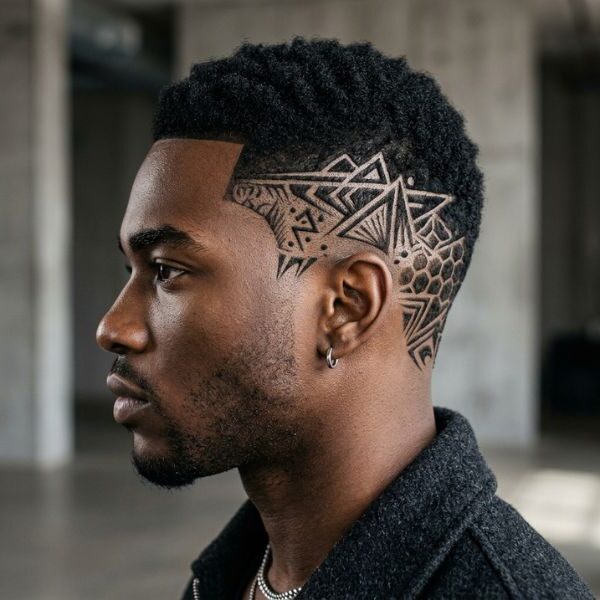
Symbol designs move past straight lines into recognizable shapes, which naturally require more precision and a steadier touch-up schedule.
4. Cross Design
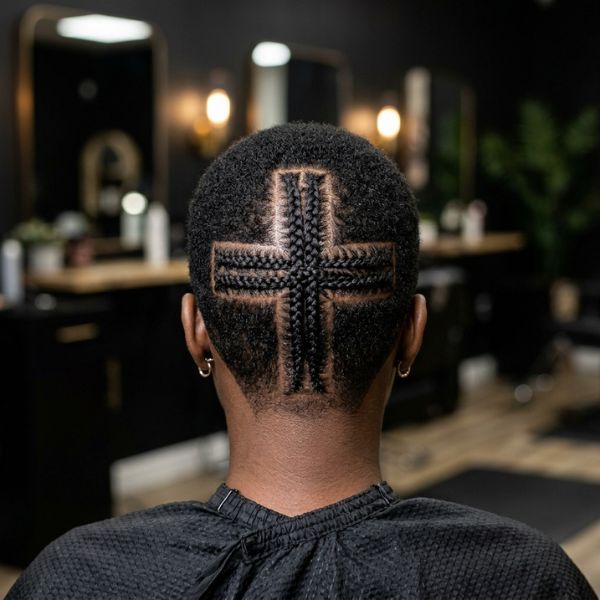
A small cross at the temple or above the ear is one of the most requested symbol designs, often carrying personal meaning. Its compact size holds up reasonably well between appointments.
5. Star Design
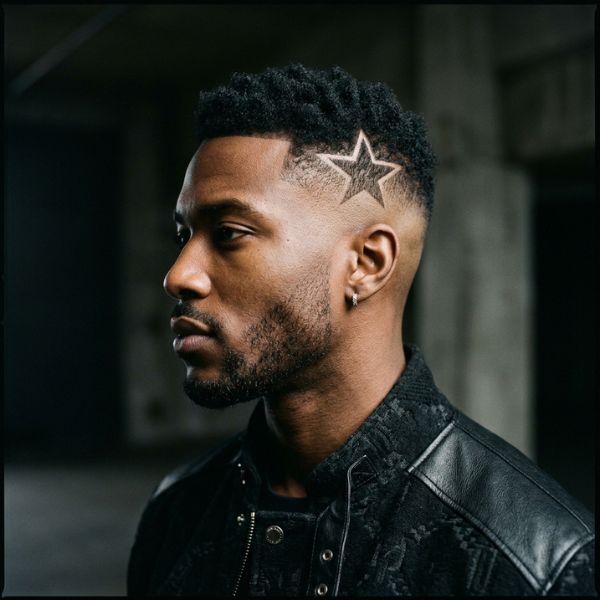
A star works as either a small accent near the hairline or a larger centerpiece on the side. Its multiple points make it more detail heavy, so keeping it smaller helps it stay crisp as hair grows.
6. Zigzag Design
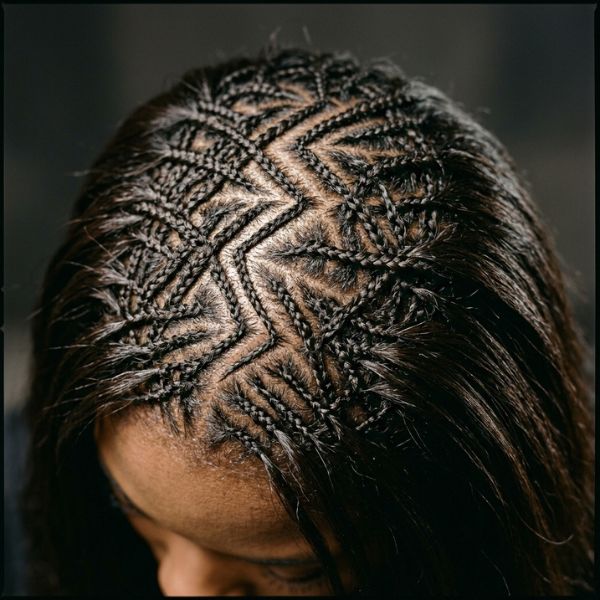
A zigzag line adds movement compared to a straight line, without the complexity of a full symbol, making it a solid middle-ground choice.
Bold Statement Designs
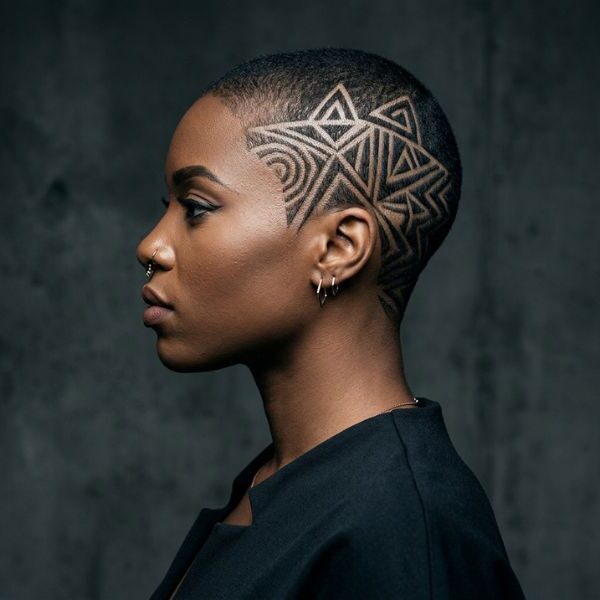
These designs demand the most skill from a barber and the most maintenance from the client, but deliver the biggest visual impact.
7. Spider Web Design
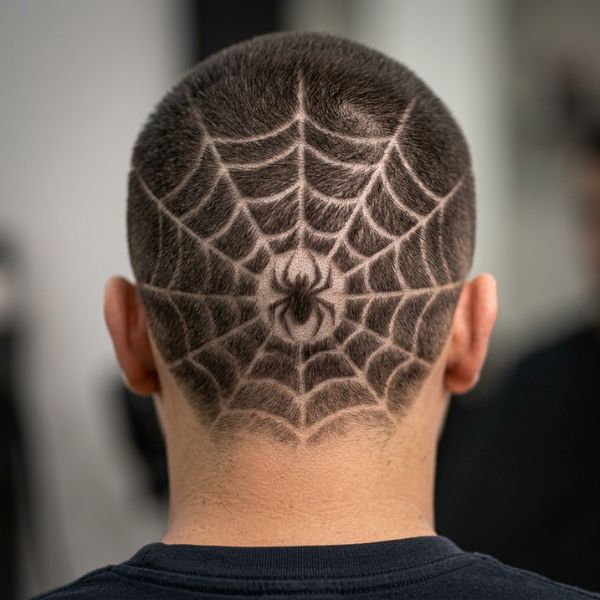
Connected shaved lines radiate outward from a point near the temple or crown edge. It is one of the more advanced designs here and works best on thicker hair, which provides more contrast.
8. Geometric Pattern Design
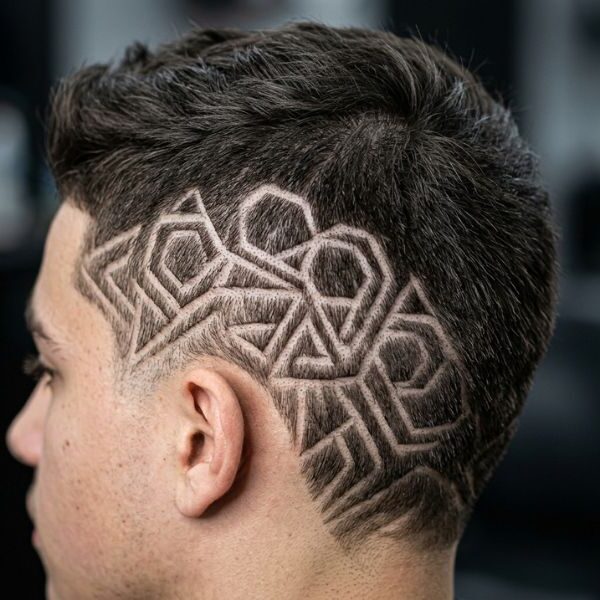
Triangles, diamonds, and interlocking shapes give a barber the most room for creativity. A geometric pattern often becomes the focal point of the cut, so it pairs well with a simpler top.
Placement Variations
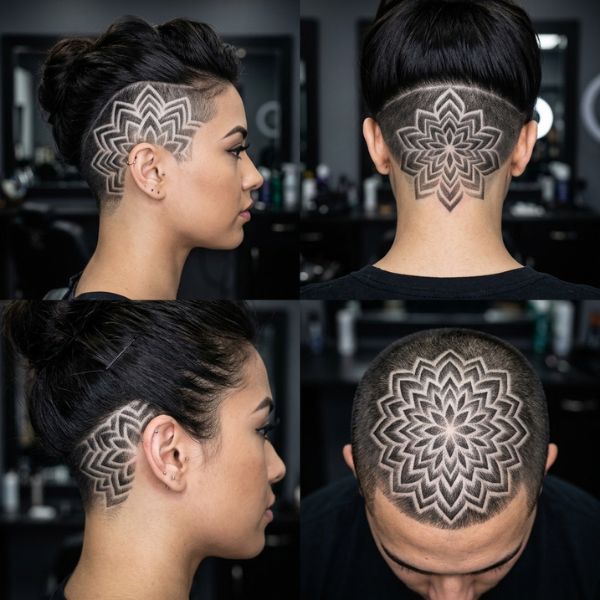
Where a design sits changes how visible it is day to day, which matters as much as the design itself.
9. Back Design
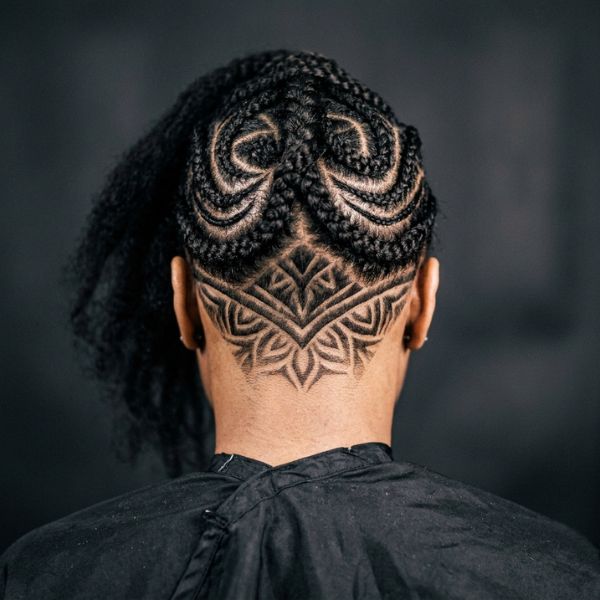
A design near the nape stays mostly hidden during normal daily activity, only showing from certain angles. It suits men who want a design but work in more conservative environments.
10. Initial or Letter Design
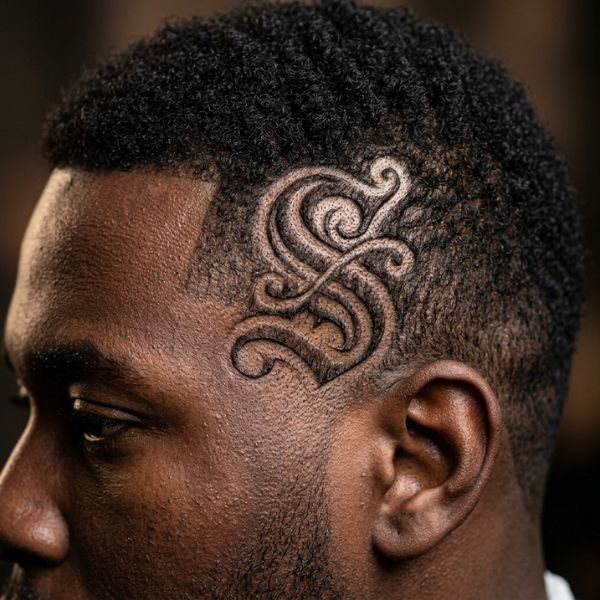
A single letter, often a first initial, is a personal alternative to a symbol and is easy for a barber to size and position consistently. It works well at the temple or above the ear.
How to Choose the Right Design for Your Hair Type
Hair type affects how clearly a design shows up and how long it stays sharp, so it is worth matching the design to what your hair actually does.
Straight Hair

Straight hair lies flat against the scalp, which gives shaved lines and shapes the cleanest possible contrast. Nearly any design on this list works well, including detailed geometric patterns, since there is little natural texture to blur the edges.
Curly Hair
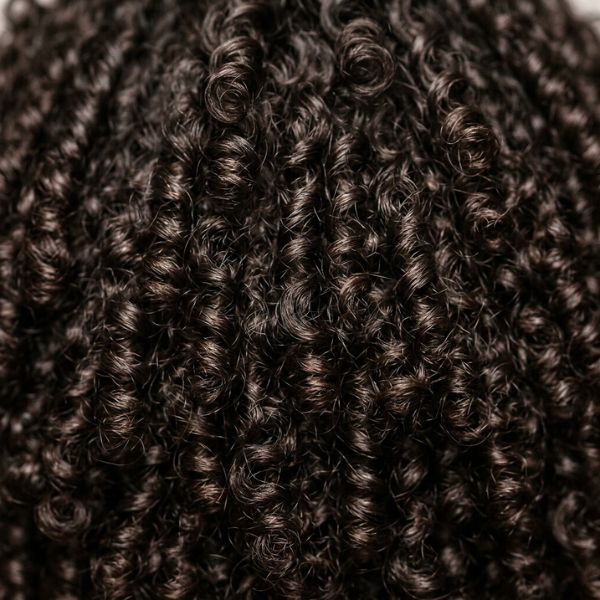
Curly hair adds volume and can soften the edges of a design if the top is left long. Keeping the length shorter near the design area, or having your barber define the edges with a liner after styling, helps the shape stay visible.
Wavy Hair
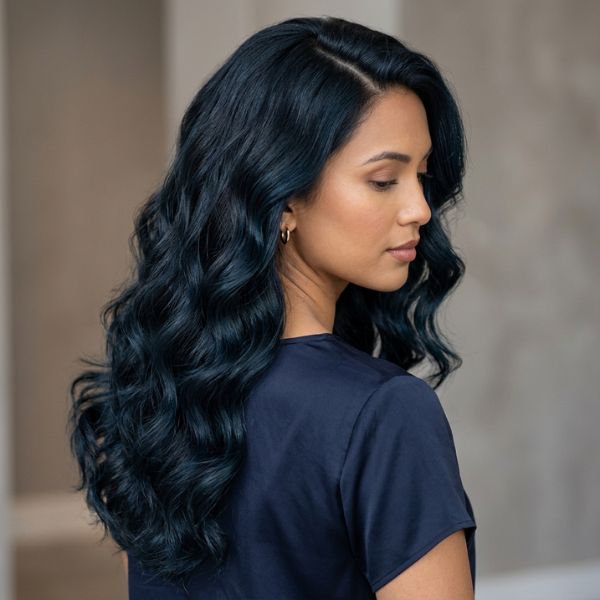
Wavy hair sits between straight and curly in terms of contrast. Simple to moderately detailed designs, like a single line, double line, or cross, tend to show up clearly without requiring extra length management.
Coily and Afro-Textured Hair

Coily and afro-textured hair can still carry a design well, but the surrounding hair typically needs to be kept a bit shorter near the shaved area for the shape to read clearly against the natural texture and shrinkage.
Fine Hair
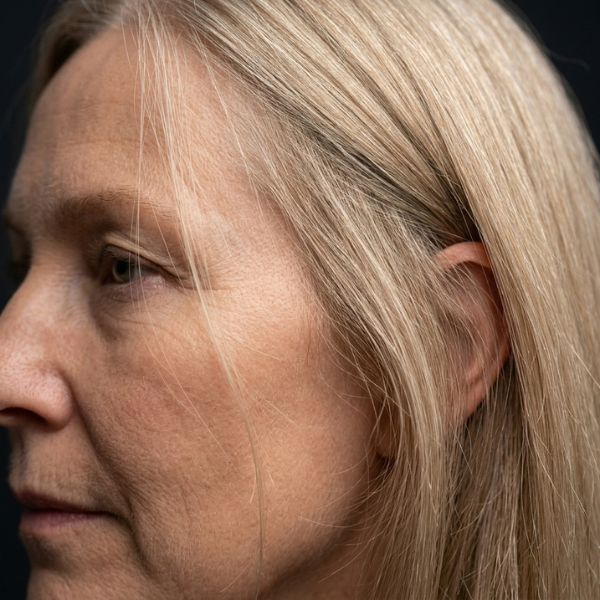
Fine hair shows shaved lines with strong contrast, similar to straight hair, but designs can look slightly more delicate since there is less volume framing them. Smaller, precise designs like a single line or a letter tend to suit fine hair particularly well.
Best Mid Taper Fade Designs by Face Shape
Oval Face

Oval faces are considered the most balanced shape, so nearly every design and placement on this list works without adjustment.
Round Face

A design placed higher on the taper, closer to the temple, adds visual length and helps offset the natural width of a round face.
Read more: Dégradé Effilé Mi-Haut pour Cheveux Bouclés — Les 17 Meilleurs Styles & Guide d’Entretien (2026)
Square Face

Angular designs like a geometric pattern or a straight single line complement a square jawline rather than competing with it.
Heart-Shaped Face

Placing a design lower on the taper, closer to the ear, balances a narrower chin against a wider forehead.
Long Face

A design kept close to the sides rather than stretching vertically helps avoid adding extra visual length to an already elongated face.
Diamond Face

A cross, star, or letter design near the temple draws attention toward the cheekbones, which is typically the widest and most defined part of a diamond face.
Rectangular Face

Horizontal line designs, like a double line, help soften the straight edges of a rectangular face shape.
Best Mid Taper Fade Designs by Age Group
Teenagers

Teenagers tend to lean toward bolder, more expressive designs like spider webs, geometric patterns, or initials, since school and social settings are usually more flexible about hairstyle.
Young Men

Young men in college or early careers often land on a middle ground, choosing symbol designs like a star or cross that show personality without being as attention-grabbing as a full pattern.
Professional Men

Professional men working in office or client-facing roles frequently prefer subtler placements, such as a side part line design or a back design, that add detail without standing out in a formal setting.
How to Ask Your Barber for a Mid Taper Fade with Design
Clear communication makes the difference between the cut you pictured and the one you actually leave with.
- Specify the fade height. Ask for a mid taper fade starting around the temple, not lower at the ear or higher near the crown.
- Give a guard range. A phrase like “1 to 3 fade” communicates contrast more precisely than saying “short sides.”
- Show a reference photo. Verbal descriptions of shapes and patterns are easy to misinterpret.
- Choose the placement first. Decide on temple, above the ear, or back placement before cutting begins.
- Ask them to sketch it first. Most barbers will draw the design with a comb or marker so you can approve it beforehand.
- Mention your hair type. This helps your barber adjust the surrounding length for better design visibility.
Mid Taper Fade with Design Video Guide
Watching a design being cut step by step makes the technique easier to follow than a written description alone. Look for barber tutorial channels that show the full process, from the initial taper fade through the final linework, so you can see how the shaved lines are layered on top of the fade in real time.
Common Mid Taper Fade Design Mistakes to Avoid
- Choosing a design that is too small. A tiny shape can lose its outline within a week or two.
- Skipping the sketch step. Going straight to the clippers without approving a rough outline first increases the risk of a design you are not happy with.
- Ignoring hair type. Leaving the top too long over a design on curly or coily hair often hides the shape almost completely.
- Overcomplicating a first design. Jumping straight to a spider web or full geometric pattern before trying a simple line makes it harder to judge whether you actually like having a design at all.
- Underestimating upkeep. Not planning for more frequent barber visits is one of the most common reasons a design looks messy within a few weeks.
How to Maintain a Mid Taper Fade with Design
Touch-Up Frequency
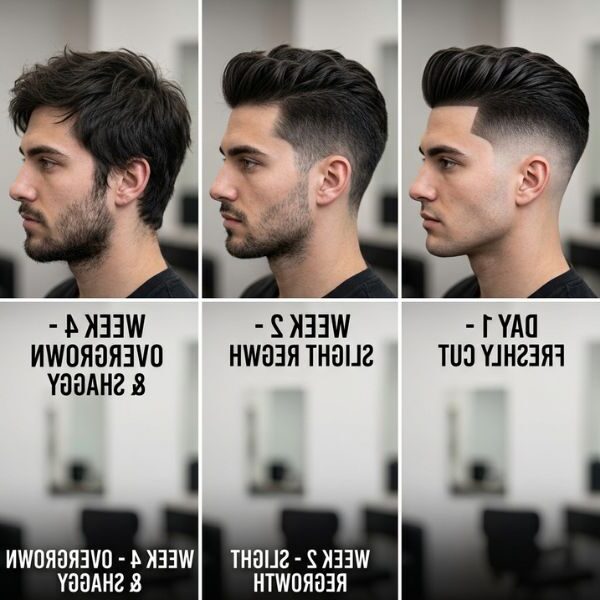
Most designs need a touch-up every one to two weeks, since the shaved lines grow out and blur noticeably faster than the surrounding taper. Simpler designs like a single line can sometimes stretch to two weeks, while detailed patterns often look best closer to the one-week mark.
At-Home Touch-Ups
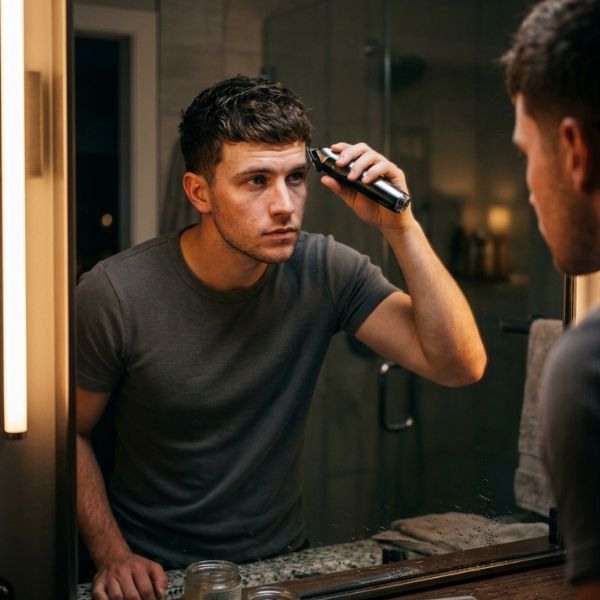
A cordless T-liner or detail trimmer lets you clean up the edges of a design between full barber visits, which extends how long the overall cut looks sharp. Working slowly and using a mirror on both sides helps avoid accidentally widening or reshaping the design.
At-Home Touch-Ups

For the fade itself rather than the design lines, a clipper with the same guard range your barber used can maintain the blend without disturbing the shaved shape. It is best to touch up the fade a day or two before the design lines, since redefining the design last gives the crispest final result.
Mid Taper Fade with Design vs Other Styles
Design vs Plain Mid Taper

A plain mid taper is lower maintenance and suits virtually any setting, while a design adds personality but requires more frequent touch-ups to stay clean.
Design vs the 3-2-1 Guard Technique

The 3-2-1 guard technique describes the blend method behind the fade itself, moving from a number 3 guard down to a 1 for a smooth gradient. It can be used as the base for a design or worn plain. The guard technique shapes the fade; the design is a separate layer cut on top of it.
Frequently Asked Questions
What is a mid taper fade with design?
It is a mid taper fade, starting its blend around the temple, with a shaved line, symbol, or pattern cut into the faded section for added detail.
How long does a design last before it grows out?
Most designs stay sharp for about one to two weeks before the shaved lines blur and need a touch-up.
Does a design work with curly or afro-textured hair?
Yes, though the hair around the design usually needs to be kept a bit shorter so the shape stays clearly visible.
What’s the easiest design for a first-timer?
A single line design is the simplest option, since it is quick to cut and easier to keep looking clean between touch-ups than a detailed pattern.
Can a design be added to an existing mid taper without a full recut?
Yes, a barber can usually add a design during a regular touch-up appointment without changing the rest of the haircut.
Does hair color affect how visible a design is?
Very light or very dark hair can make some designs harder to see clearly, so it is worth mentioning your hair color when discussing design size and complexity.
Where should I place a design if I want it to stay subtle?
A back design near the nape stays less visible day to day than a design placed at the temple, since it is less exposed during normal interactions.
About the Author
This guide was written by a barbershop industry content specialist who researches men’s taper and fade hairstyles, clipper techniques, and barber consultation practices to help readers choose a cut that actually fits their hair type, face shape, and lifestyle. Each design idea in this article reflects current barbershop trends and standard cutting techniques used across mid taper fade haircuts.
Conclusion
A mid taper fade with design works because it adds a personal, distinct detail to a haircut that already looks clean and put together on its own. The right choice depends less on which design looks best in a photo and more on your hair type, face shape, and how much upkeep you are realistically willing to commit to. If this is your first time trying a design, start with a single line before working up to something bolder, and always let your barber sketch the placement before the clippers come out.

Reyansh is an experienced fashion writer with 6+ years of writing experience, passionate about fashion trends, styling ideas, and modern looks. He creates simple, engaging content that helps readers discover their personal style with confidence.