


The main difference between a burst fade and a taper fade is the shape. A burst fade curves in a half circle around the ear and leaves the back long. A taper shortens the hair gradually down the sideburns and neckline, so it follows the natural hairline. The burst is rounder and bolder. The taper is quieter and more classic.
Barbers use the terms loosely, which causes mix ups in the chair. A request for “a taper fade” can lead to a very different result than the one you pictured.
This guide shows how the two compare around the ear, temple and nape. You will also find advice for each hair texture and face shape, upkeep timing, and what to say to your barber.
Burst Fade vs Taper: Ear, Temple and Nape Views
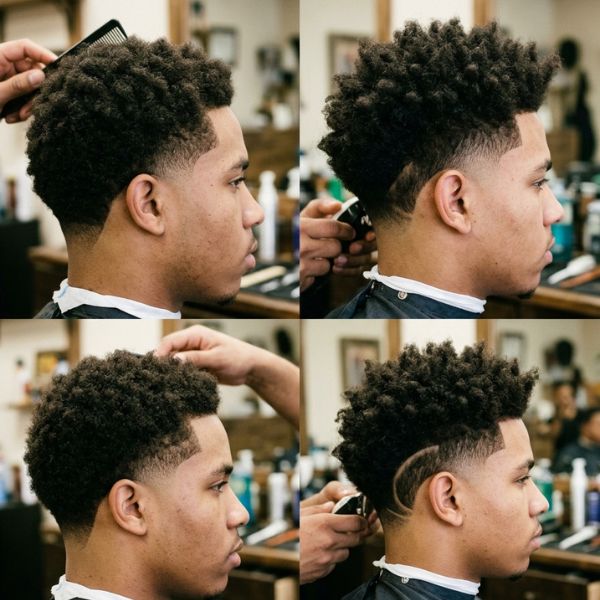
Check each area of the head when you look at a photo. In the burst fade vs taper comparison, the differences show up in three places.
- Ear: a burst fade wraps around the ear in a curve, and the shortest hair sits right behind it. A taper only trims close around the ear, along a gentle line.
- Temple: both blend into the sideburn. A burst fades up toward the temple in an arc, while a taper keeps the temple soft and natural.
- Nape: a burst leaves the hair at the center back long, so the neck is not shaved. A taper shortens the neckline, so the back looks tidy and short.
The back view is the quickest test. Long hair in the center back means a burst. A short, clean neckline means a taper.
What is a taper?
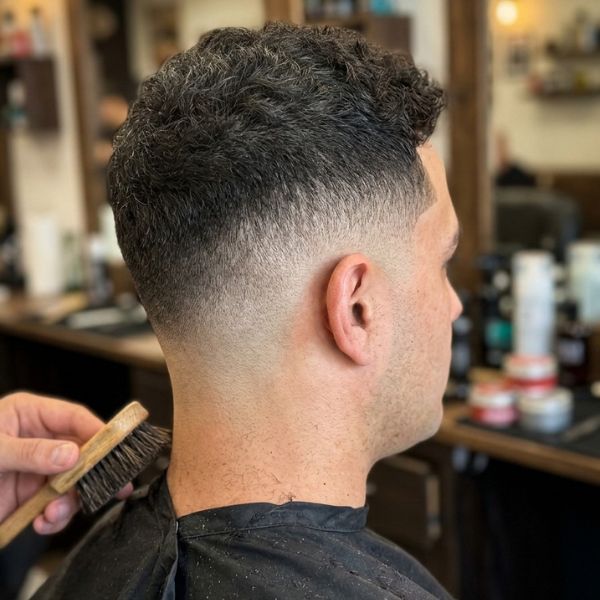
A taper is a gradual blend from longer hair on top to shorter hair at the sides and nape. It ends at the natural hairline, and it keeps some length, so it looks clean without looking shaved.
A taper shortens the hair along the sideburns and the neckline. A fade goes further and drops to bare skin. Every fade is a type of taper, but not every taper is a fade.
Key traits:
- Starts low, near the ear and nape
- Ends at the natural hairline
- Looks soft and conservative
- Grows out slowly
What is a burst fade?

A burst fade is a fade that curves in a half circle around the ear and into the neckline. The shortest hair sits right behind the ear, and the hair gets longer as it spreads out. The top and the back keep their length.
It comes in low, mid and high versions. It also works with a mullet, mohawk, crop or curls. You may hear it called a radial fade or a halo taper.
Key traits:
- A rounded arc around the ear
- Long hair left at the center back
- Strong contrast with the top
- Needs regular upkeep
What Does “Burst Taper” Mean?
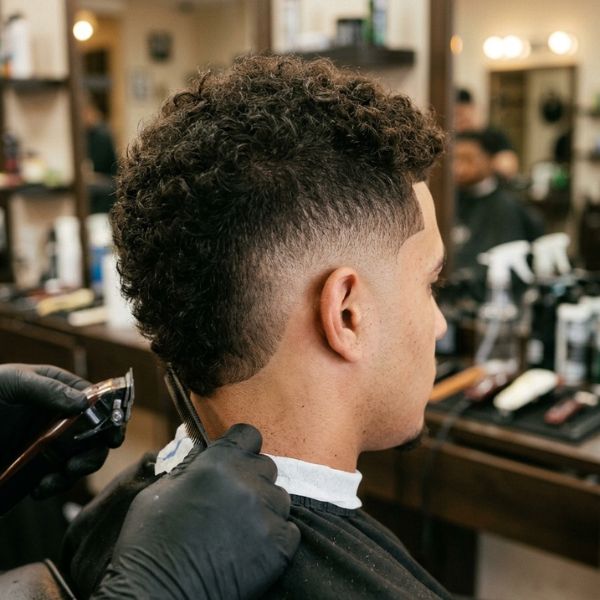
A burst taper keeps the curve of a burst but softens the blend. The shortest point can stop at a guard instead of bare skin, so the change from short to long looks gentler.
Think of it as the middle option:
- Taper: quiet, follows the hairline
- Burst taper: curved, with a soft blend
- Burst fade: curved, with strong contrast
You can ask for a burst taper by name. It suits you if you like the shape of a burst but not the bare skin.
Burst fade vs taper fade: which looks better for your hair texture?
Hair texture changes how each cut reads, and it can tip the burst fade vs taper choice. Density and growth pattern matter as much as curl type.
Read more:Low Taper Fade with Buzz Cut: Best Styles, Guard Sizes & Barber Tips
Straight hair
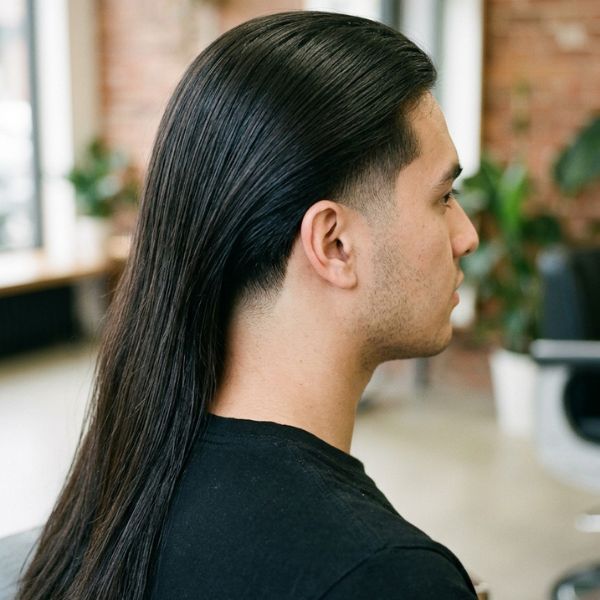
Straight hair shows every line, so both cuts look crisp. A burst highlights the curved edge. A taper looks cleaner and more traditional. Add layers on top, so straight hair does not fall flat.
Wavy hair

Both work well. A burst gives wavy hair a relaxed, blended edge and room to flow at the back. A taper keeps the sides tidy and lets the waves sit naturally.
Curly hair

Curls stand out against the faded sides of a burst, so the contrast is strong. A taper keeps the sides neat while the curls stay full. The top needs some length, usually 2 to 3 inches.
Coily hair

Tight coils add height and shape, so a burst fade looks bold and defined. Coily hair shrinks when dry, so ask the barber to cut with that in mind. Choose a barber who has experience with your texture. A taper is a good choice if you prefer a softer outline.
What about face shape?
Advice varies by source, so treat this as a starting point.
- Oval: both suit you.
- Round: a mid or high burst adds height at the sides and suggests a slimmer face. A taper with a tall top also works.
- Square: a low burst or a taper softens a strong jaw.
- Diamond: a mid to low burst balances the cheekbones.
- Long or oblong: a taper keeps the sides softer, and avoids adding more height.
Hair density, growth pattern and how often you visit the barber matter more than face shape. The top you pick also changes the look.
Which is more professional?
In the burst fade vs taper fade debate, both look professional when blended well. A taper has the edge in very formal settings, because it is the most conservative. A low burst or a burst taper also looks smart and has a little more shape.
A high burst with bare skin looks bold. It suits creative workplaces and casual settings better. Clean edges matter more than the name of the cut.
Read more: Low Taper Fade with Buzz Cut: Best Styles, Guard Sizes & Barber Tips
Maintenance and grow-out
Burst fade vs taper maintenance depends on how much the line shows as it grows.
- Taper: every 4 to 5 weeks. It grows out slowly.
- Burst taper: every 3 to 4 weeks.
- Burst fade: every 2 to 3 weeks. Regrowth shows around two weeks, and the curve blurs by week three or four.
- High burst or skin finish: every 2 to 3 weeks, or sooner.
Hair grows about half an inch a month. After 4 to 6 weeks, that is roughly half to three quarters of an inch of regrowth. A taper hides this well. A burst loses its curve.
Between visits, a detail trimmer can tidy the neckline. At home, wash two or three times a week and use a light product on the top.
What to tell your barber
Barbers cut the sides and back, and you cannot see them in a mirror. Name the shape, not just “a fade.” Do not ask for a “taper fade” on its own, because the term is vague. Say whether you want a taper that ends at the natural hairline or a fade that goes to the skin.
What to say in the chair: taper
- “A low taper, starting just above my ear.”
- “Blended with a guard, ending at my natural hairline.”
- “A natural, tidy neckline.”
- “About 2 to 3 inches on top.”
- Show photos from the front, side and back.
What to say in the chair: burst fade
- “A burst fade, mid height.”
- “Curved around the ear, down to the skin” or “blended with a guard.”
- “Keep the length at the back, do not trim the neck.”
- “About 2 to 3 inches on top.”
- Show photos from the front, side and back.
For a burst taper, say “a burst taper, blended with a guard.” Add the top length in inches.
Read more: 12 Top Trending Guard Buzz Haircuts for Men
Common mistakes
- Asking for “just a fade.” The barber may give you a straight fade, not a burst.
- Leaving out the height. Low, mid and high look very different.
- Skipping the neckline. The long back can get trimmed away, or the taper can end up too short.
- Using no reference photo. Words are easy to misread.
- Ignoring your hair texture. Curly and coily hair need a barber who knows them.
- Waiting too long between trims. The burst loses its curve fast.
Compare your preferences
Still weighing burst fade vs taper fade? Use this quick check:
- Choose a taper if you want a quiet, classic look, longer gaps between trims, or a very professional finish.
- Choose a burst taper if you like the curve but want a softer blend.
- Choose a burst fade if you want bold shape, strong contrast and a long back, and you do not mind visits every two to three weeks.
Frequently asked questions
What is the difference between a burst fade and a taper fade?
A burst fade curves around the ear and leaves the back long. A taper fades gradually along the hairline and shortens the neckline.
What is a burst taper?
It is a burst with a softer blend. The curve stays, but the shortest point usually stops at a guard, not bare skin.
Which lasts longer, a burst fade or a taper?
A taper lasts longer, usually 4 to 5 weeks. A burst fade needs a trim every 2 to 3 weeks.
Is a burst fade or taper more professional?
A taper is slightly more conservative. A low burst or burst taper is also smart.
Does a burst fade work on curly and coily hair?
Yes. Curls and coils stand out against the faded sides. Find a barber who knows your texture.
Is a taper fade the same as a fade?
Not exactly. A taper ends at the natural hairline, while a fade goes down to the skin.
How do I ask my barber for a burst fade?
Name the burst, the height and how close it goes, say to keep the length at the back, and show photos.
Final thoughts
Burst fade vs taper fade is not a question with one right answer. Both are great choices. The burst gives you shape and contrast. The taper gives you a clean, classic finish with less upkeep.

Reyansh is an experienced fashion writer with 6+ years of writing experience, passionate about fashion trends, styling ideas, and modern looks. He creates simple, engaging content that helps readers discover their personal style with confidence.