


Choosing the right high taper fade starts with understanding where the shortening begins, how the finish looks from the back, and what your hair type does with the length on top.
This guide breaks down how the cut differs from mid tapers and high fades, which finish to request, five styles worth showing your barber, and how texture and density change the result. You also get an exact consult script, a grow-out plan, and the mistakes that cause patchy blends.
Use it to walk into the shop with clear words, realistic expectations, and a haircut that still looks sharp two weeks later. Written for clients and newer barbers alike.
What Makes a High Taper Fade Different?
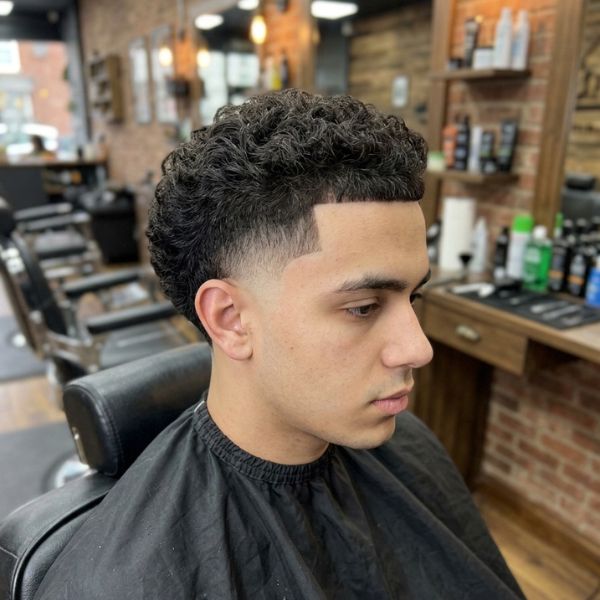
A high taper fade is a haircut where the hair shortens gradually from the top section down to the sideburns and neckline, and the blend starts high on the head. The starting point usually sits near the temple line or just above it. That high start creates strong contrast between the sides and the top.
The word “taper” matters here. A classic taper only shortens the hair around the sideburns and nape. A fade blends much more of the sides and back, often down to the skin. A high taper fade sits between the two. It keeps more length on the lower sides than a skin fade does, but it still looks sharp and clean.
Here is what defines the cut:
- The blend begins at or above the temple
- The hair gets shorter in smooth steps toward the ear, sideburn and nape
- The top keeps its length for styling
- The neckline can be rounded, squared or tapered
Because the contrast sits high, the cut reads as clean and modern. It suits office settings, gym routines and formal events equally well. It also works for short, medium and long hair on top, which is why barbers request it so often as a base for other styles.
High Taper vs Mid Taper vs High Fade
| Feature | High Taper Fade | Mid Taper | High Fade |
| Blend starts | Near the temple | Around the middle of the sides | Above the temple |
| Bottom length | Short, not always bare | Short, with more length retained | Often to the skin |
| Contrast | Strong | Moderate | Very strong |
| Maintenance | Every 2 to 3 weeks | Every 3 to 4 weeks | Every 2 weeks |
| Best for | Clean, bold looks | Professional, subtle looks | Dramatic, high contrast looks |
Compare your preferences first
Before booking, answer three quick questions. How often can you visit a barber? How much contrast do you want at the sides? Does your workplace or school prefer a conservative look?
If you can visit every two weeks and want maximum contrast, ask for a high fade. If you want a soft, easy grow-out, ask for a mid taper. If you want a balanced result that looks sharp but stays flexible, the high taper fade fits best.
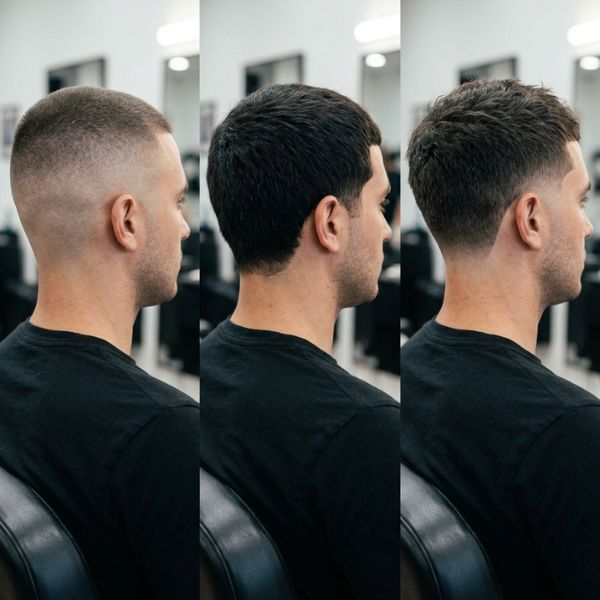
Side and Rear Views Matter
Most photos online show the front or the side only. That is a problem, because the back of your head is what people notice when you walk away. The rear view shows whether the blend is smooth or patchy.
Check these areas on the side view:
- The blend should rise evenly from the sideburn toward the temple
- The line above the ear should curve, not cut straight across
- No visible steps or dark bands between guard lengths
Check these areas on the rear view:
- The neckline shape: rounded, squared or natural
- The nape taper, which should fade into the skin smoothly
- Symmetry between the left and right sides
A rounded neckline grows out more naturally. A squared neckline looks crisp on day one but loses its shape faster. A natural or tapered neckline suits men with uneven hair growth at the nape. Ask your barber to show you the back with a hand mirror before you leave the chair. This simple step catches most errors while they are still fixable.
Read more: French Crop Taper Fade: The Complete Guide to Styles, Face Shapes and Barber Tips
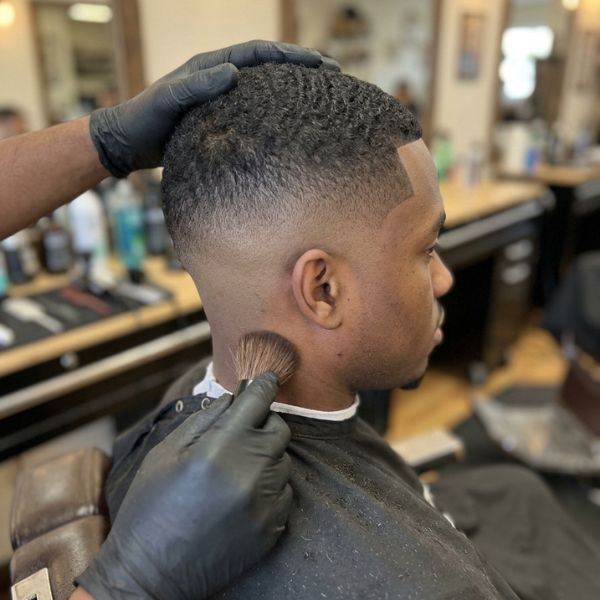
High Taper Fade Finishes: Shadow, Zero or Skin
| Finish | Look at the bottom | Typical tool | Regrowth visibility |
| Shadow | A soft dark haze of short hair | Clipper with a very short guard | Low |
| Zero | Very close, no guard on the clipper | Clipper with a zero gap blade | Medium |
| Skin | Bare skin, smooth | Foil shaver or trimmer | High |
5 High Taper Fade Styles to Consider

These five styles cover most hair types and lifestyles.
- Textured crop. The top is cut short with choppy layers and a forward fringe. Add matte clay for separation. This is the easiest option for busy mornings.
- Quiff. The front is lifted and swept up, with length on top for volume. Use a blow dryer and a medium hold paste. The high taper fade keeps the sides tight so the volume stands out.
- Slick back or side part. The top is combed back or to one side with a defined part. Use pomade for shine or cream for a natural finish. This pairing looks polished in formal and business settings.
- Curls or coils on top. Natural curls sit above a clean blend, so the shape of the curl pattern becomes the focus. Use a curl cream and keep the top moisturized. This style works for Type 3 and Type 4 hair.
- Buzz cut with a beard. A short, even buzz on top with a high taper fade at the sides gives a sharp, low effort look. A beard blended into the taper completes it.
The five options share the same base. What changes is the length on top, the product you use and how much time you spend each morning. Pick the one that matches your routine, not just your inspiration photo.
Read more: Messy French Crop vs Textured Crop
How Texture and Density Change the Result
| Hair type | What to expect | Barber tip |
| Straight, fine | Blend can look flat; less top volume | Keep the top a little longer and use texture powder |
| Wavy | Natural movement; blends well | Leave enough length so waves can form |
| Curly or coily | Strong contrast; shape holds well | Cut the top with the curl pattern in mind |
| Thick, dense | Blend needs extra blending passes | Ask for thinning or texturizing on top |
| Thin, low density | Scalp shows through faster at short guards | Choose a shadow finish over skin |
Exact Barber Request
A clear request saves time and prevents surprises. Use this step by step script.
- Name the cut: “I would like a high taper fade.”
- State the starting point: “Start the blend around my temple.”
- Choose the finish: “Shadow finish at the bottom” or “skin at the bottom.”
- Describe the top: “Leave about two to three inches on top, textured.”
- Choose the neckline: “Rounded neckline” or “squared neckline.”
- Mention the edges: “Clean up the sideburns and add a light line up.”
You can also bring a photo from the front, side and back. Photos help, but the words above stop your barber from guessing. If you wear glasses, tell your barber so the blend can be checked around the arms of your frames. If you have a beard, mention that you want the beard blended into the taper.
Maintenance and Grow-Out
A high taper fade looks best in its first two weeks. After that, the sides begin to fill in and the contrast softens.
Follow this simple routine:
- Book a trim every 2 to 3 weeks for a crisp look
- Stretch to 4 weeks if you prefer a softer grow-out
- Wash and condition the top, and moisturize the scalp on the sides
- Use a soft brush or comb to keep the top neat
- Apply sunscreen to exposed skin at the sides and nape
For grow-out, expect the blend to look natural for about three weeks, then rounder and fuller by week five. If you plan to grow the top longer, keep the tapers going every 4 to 6 weeks to keep the sides clean while the top gains length. Dermatology guidance consistently recommends sun protection for newly exposed scalp areas, so do not skip it after a fresh cut.
Common High Taper Mistakes
Most poor results come from small communication errors or rushed technique. These are the most common ones.
- Starting the blend too high. The cut ends up looking like a bald fade and loses the taper softness.
- Visible lines between guard sizes. This happens when the barber skips blending passes. Ask for a check with a lighter guard.
- Wrong finish for your hair density. A skin finish on thin hair can look patchy.
- Ignoring head shape. Flat spots, bumps and a prominent occipital bone change where the blend should sit.
- Overly square neckline. It looks sharp for a week and awkward for the next three.
- Skipping product guidance. Sharp sides need a top that is styled, or the whole cut looks unfinished.
If you spot one of these mistakes, speak up in the chair. Most issues are easy to adjust at that stage, and a good barber will welcome the feedback.
Read more: Mid Taper vs Low Taper: Differences, Height & Which to Choose
Sources and Further Reading
This guide draws on barbering education principles and common industry practice. For more depth, look for these types of references:
- Barber school curriculum notes on tapers, fades and clipper work
- Clipper manufacturer guard size charts and blade guides
- Men’s grooming publications that interview working barbers
- Dermatology organization guidance on scalp care and sun protection
- Your own barber, who knows your head shape and hair growth pattern best
Frequently Asked Questions
What is a high taper fade?
A high taper fade is a haircut where the hair gradually shortens from a high starting point near the temple down to the sideburns and nape.
Is a high taper fade the same as a high fade?
No. A high fade usually goes shorter, often to the skin, while a high taper fade keeps a softer, more gradual blend.
How long does a high taper fade last?
It looks sharpest for about two weeks and stays presentable for three to four weeks.
What should I say to my barber?
Say “high taper fade, blend starting at the temple, shadow finish, and a rounded neckline,” then describe the length on top.
Does a high taper fade work on curly hair?
Yes. Curly and coily hair holds the contrast well and the top shows off the curl pattern.
Can I get a high taper fade with a beard?
Yes. Ask your barber to blend the beard into the taper so the transition looks natural.
Is a high taper fade professional enough for work?
Yes. With a shadow finish and a neat top, it looks clean and suits most workplaces.
How often should I get a trim?
Every two to three weeks for a crisp look, or every four weeks for a softer grow-out.
Which face shapes suit a high taper fade?
It works on most face shapes. Round faces gain structure from taller tops, and square faces can soften with a textured crop.
Can women get a high taper fade?
Yes. The cut works for any gender, and barbers can adjust the length on top for the look you want.
Conclusion:
A great high taper fade comes down to three choices: where the blend starts, how short the finish is, and which top style fits your hair and routine.
Use the comparison tables, the barber script and the maintenance plan above, and check the rear view before you leave the chair. Do that, and you will get a clean cut that grows out well.

Reyansh is an experienced fashion writer with 6+ years of writing experience, passionate about fashion trends, styling ideas, and modern looks. He creates simple, engaging content that helps readers discover their personal style with confidence.