


A mid taper fade fringe pairs neat, gradually shortened sides with a longer, forward-falling top. It looks sharp, works in most settings, and doesn’t take much effort to style.
This guide explains what the cut is, how it differs from a mid fade, six styles worth trying, mistakes to avoid, and how to ask your barber for it.
You’ll also find styling tips, face shape advice, and answers to common questions.
What Is a Mid Taper Fade Fringe Haircut?
A mid taper fade fringe haircut has two parts. The sides and back are tapered, which means the hair gets gradually shorter as it moves down the head.
The top is left longer, and the front section (the fringe) falls over the forehead.
Here is how the parts break down:
- Mid: the taper starts around the middle of the sides, roughly at the temple.
- Taper: the hair shortens gradually but usually keeps some length at the bottom.
- Fade: in everyday use, the blend is smooth with no visible lines.
- Fringe: the front hair sits forward instead of being swept straight back.
Most barbers cut the fringe between 2 and 4 inches (5 to 10 cm), depending on hair type. The result keeps the sides clean and puts the attention on the top.
What’s the Difference Between a Mid Fade and a Mid Taper?
| Feature | Mid Taper | Mid Fade |
| Starting point | Mid-side, near the temple | Mid-side, near the temple |
| Shortest length | Usually keeps some hair | Can go to skin |
| Look | Soft, classic, polished | Sharp, bold, high contrast |
| Upkeep | Every 3 to 5 weeks | Every 2 to 3 weeks |
| Best for | Office, school, everyday | Streetwear, statement looks |
Why Mid Taper Fade Fringe Is So Popular in 2026
Three things keep this cut popular: it’s flexible, it’s forgiving, and it looks current.
- It suits many settings. It looks neat at work and relaxed on weekends.
- It works with most hair types. Straight, wavy, curly, and coily hair can all wear it.
- It helps with coverage. A fringe can soften a larger forehead and add the look of density on top.
- It grows out well. A taper looks acceptable for longer than a skin fade does.
- It’s easy to change. You can push it forward, to the side, or up, all with one haircut.
Short, textured, natural-looking hair has stayed in style, and this cut fits that trend without needing much product.
Read more: 20 Best Mid Taper Fade Haircuts for Straight Hair (2026)
6 Mid Taper Fade Fringe Styles to Try
1. Short Fringe with Mid Taper Fade
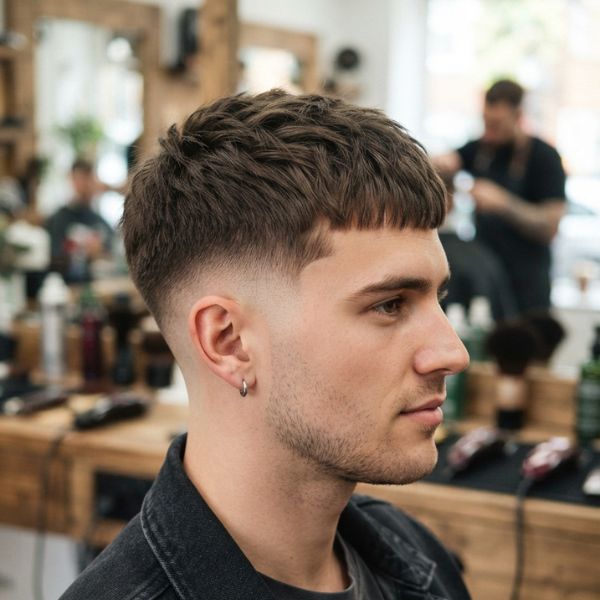
The top is kept short, often about 1.5 to 2.5 inches, and combed forward with a blunt or lightly textured edge.
- Best for: straight or thick hair
- Why it works: it’s clean and takes about two minutes to style
- Tip: ask for slight texture so it doesn’t look like a bowl cut
2. Curtain Fringe with Mid Taper Fade

The front hair parts in the middle and falls to each side, framing the face. It needs at least 3 to 4 inches of length on top.
- Best for: straight or slightly wavy hair
- Why it works: it softens angular features
- Tip: a light blow-dry sets the part
3. Side-Swept Fringe with Mid Taper Fade
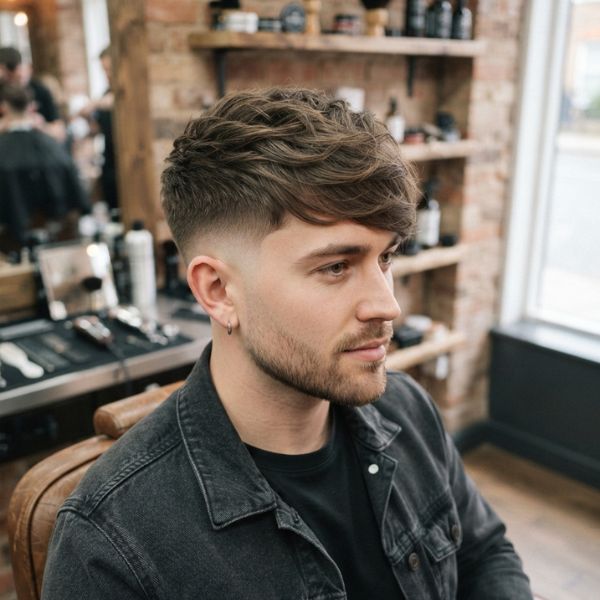
The front sweeps diagonally across the forehead. It’s the easiest option to wear to work.
- Best for: professional settings
- Why it works: it looks tidy and intentional
- Tip: use a small amount of cream to keep the sweep in place
4. Choppy Fringe with Mid Taper Fade
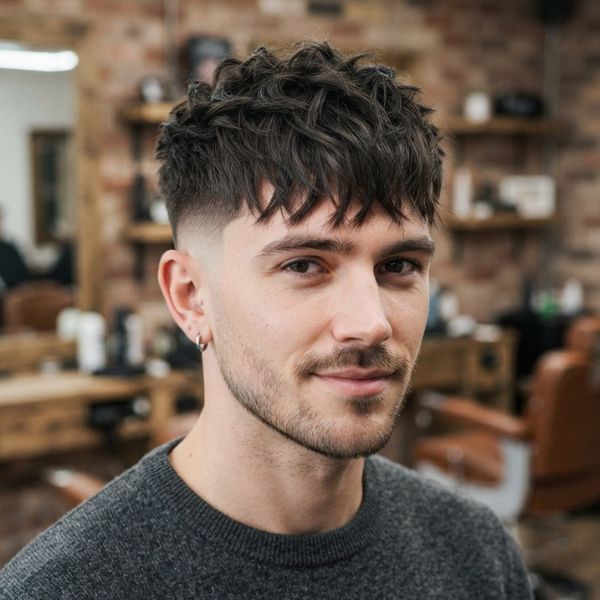
The barber uses point cutting to make uneven, separated pieces. The result looks a little messy on purpose.
- Best for: fine or flat hair that needs body
- Why it works: the texture gives the illusion of thickness
- Tip: finish with matte clay, then break it up with your fingers
5. Fringe with Mid Taper Fade Blowout

The top is lifted and dried upward and forward for extra volume. It needs a bit more length, around 3 to 5 inches.
- Best for: thick, wavy, or curly hair
- Why it works: it adds height and a fuller shape
- Tip: use a sea salt spray before drying for hold
6. Wavy Fringe with Mid Taper Fade
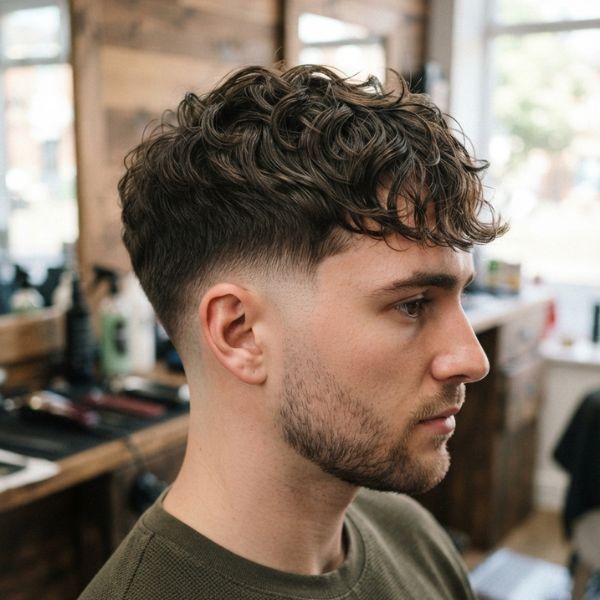
This cut works with natural waves instead of fighting them. The barber removes weight so the waves fall forward evenly.
- Best for: wavy or loosely curly hair
- Why it works: it looks natural and needs less styling
- Tip: apply a curl cream on damp hair and air-dry or diffuse
Common Mid Taper Fade Fringe Mistakes to Avoid
Most bad results come from a few avoidable errors.
1. Cutting the Fringe Too Short

A fringe that’s too short can stick up or look childish. Start longer. Hair can be trimmed later but can’t be put back.
2. Letting the Barber Guard-Cut the Fringe
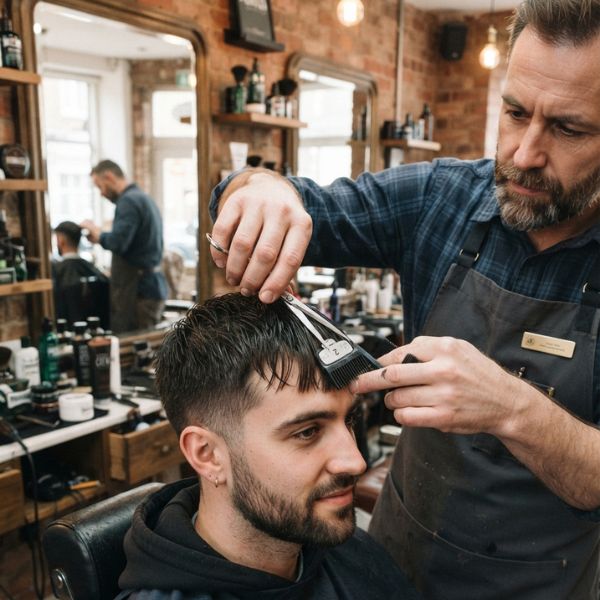
Clippers with a guard flatten the top into a uniform block. A fringe should be cut with scissors so the length varies and moves naturally.
3. Skipping Heat Protection When Blow-Drying

Regular blow-drying dries out hair over time. Use a heat protectant spray and keep the dryer on medium heat.
4. Choosing a Full Mid Fade Instead of a Mid Taper

A skin-level fade can look severe under a soft fringe. If you want a gentle, everyday look, ask for a taper.
5. Waiting Too Long Between Fringe Trims

Fringe hair grows into your eyes quickly. Overgrown fringe loses its shape and looks untidy.
6. Using Heavy Wax on Textured Fringes

Thick wax weighs down texture and leaves hair looking greasy. Light clay or paste gives definition without the heaviness.
How to Style a Mid Taper Fade Fringe
Daily Styling Routine
This routine takes about five minutes.
- Wash hair and towel-dry until it’s damp, not dripping.
- Apply a heat protectant if you’ll use a blow-dryer.
- Add a pea-sized amount of styling product or sea salt spray to the roots.
- Blow-dry the fringe forward first, then set the direction you want.
- Warm a small amount of clay or paste between your palms and work it through the top.
- Shape the front with your fingers and stop when it looks natural.
Products That Work Best
- Matte clay: good for choppy or textured styles
- Sea salt spray: adds grip and volume to fine hair
- Light cream: keeps waves and curls soft
- Heat protectant: essential before blow-drying
- Texturizing powder: adds lift to flat roots
Choose products based on your hair type, not on marketing.
How Often Should You Trim the Fringe?
Trim the fringe every 3 to 4 weeks. Refresh the sides and neckline every 3 to 5 weeks for a mid taper, or every 2 to 3 weeks for a full fade. Hair grows about half an inch a month on average, so the fringe changes faster than you’d expect.
Which Face Shape Suits a Tapered Fringe?
The cut works on most faces, but small changes to length and direction improve the result.
Oval Face
Almost any fringe works. A side-swept or curtain fringe keeps balance.
Round Face
Add height with a blowout or textured fringe. Avoid a short, blunt fringe that adds width.
Square Face
A choppy or side-swept fringe softens a strong jawline.
Long Face
Keep the fringe fuller and slightly longer to shorten the look of the forehead. Avoid too much height.
Heart-Shaped Face
A side-swept or curtain fringe balances a wider forehead and narrower chin.
Best Mid Taper Fade Fringe Styles by Age Group
Teenagers
Choppy and short fringes are popular and easy to style. Check school grooming rules before choosing a fade level.
Young Men
Blowouts and wavy fringes give the most room to experiment. Try different lengths until you find your preference.
Professional Men
A side-swept or short fringe with a soft taper looks neat and current. Keep the sides conservative and the top tidy.
Does a Tapered Fringe Make You Look Younger or Older?
It can do either, depending on the styling. A textured, slightly messy fringe tends to look younger and more casual. A neat, side-swept fringe with a soft taper looks more mature and professional.
Two things affect the impression most:
- Texture: more texture reads as youthful, while smooth and combed reads as polished.
- Contrast: a soft taper looks refined, while a stark skin fade looks bolder and younger.
It’s also a practical option for thinning hair at the front, since a fringe can cover the hairline.
Read more: 17 Best Mid Taper Fade Curly Hair Styles [2026 Care Guide]
How to Ask Your Barber for a Mid Taper Fade Fringe
Key Phrases to Use With Your Barber
- “Mid taper, keep some length at the bottom.”
- “Scissor-cut fringe, please, not clippers.”
- “Leave about [X] inches on top, with texture.”
- “Blend it into the top with no harsh line.”
- “Keep the neckline natural” or “Square it off,” depending on preference.
Showing a photo helps more than any description.
Choosing the Right Length and Guard Number
Guard numbers vary by clipper brand, so treat these as starting points and confirm with your barber.
- Soft taper: finish around a #2 to #3 at the bottom
- Tighter taper: finish around a #1 to #1.5
- Fade to skin: a bald or zero-guard finish
- Top and fringe: 2 to 5 inches, cut with scissors
If you’re unsure, start with the longer option. You can always go shorter next visit.
Common Barber Mistakes to Mention
- Taking too much weight off the fringe so it won’t hold shape
- Starting the taper too high, which turns a mid taper into a high one
- Leaving a visible line where the taper meets the top
- Using a guard on the top instead of scissors
Mention these politely at the start. Most barbers appreciate clear direction.
Mid Taper Fade Fringe: Video Guide
[Embed a short tutorial or before-and-after video of a mid taper fade fringe here.
A step-by-step barber demonstration works best, with a text summary beneath it to help search engines and AI tools understand the video.]
Read more: Mid Taper Fade Fringe: Complete Style & Length Guide (2026)
Frequently Asked Questions
What is a mid taper fade fringe?
It is a haircut with sides that shorten gradually from the temple down, paired with a longer fringe on top that falls forward.
Is a mid taper the same as a mid fade?
No. A mid taper stays longer and softer, while a mid fade blends down to very short hair or skin.
How long should the fringe be?
Most people wear it between 2 and 4 inches, though blowout styles can go up to 5 inches.
How often should I get a haircut?
Every 3 to 5 weeks for a taper, or every 2 to 3 weeks if you want a skin fade to stay sharp.
Does it work on curly or coily hair?
Yes. Ask for a curl-friendly cut that keeps length and definition on top, and use a moisturizing cream.
Is it suitable for thin hair?
Yes. A textured fringe adds the look of density and can help cover a receding front hairline.
What products should I use?
Matte clay or paste for texture, sea salt spray for volume, and a heat protectant if you blow-dry.
Is it professional enough for the office?
Yes, especially as a side-swept fringe with a soft taper and a tidy finish.
About the Author
[Add your name, role, and relevant experience here, such as years as a barber or stylist, certifications, salon or barbershop, and any published work.
A real bio with verifiable credentials is one of the strongest trust signals for Google and AI search tools.]
Conclusion
The mid taper fade fringe stays popular because it’s practical.
It’s neat on the sides, flexible on top, and simple to maintain. The most important decisions are the fade level, the fringe length, and the styling routine.
Choose a taper if you want a soft, everyday look, and a fade if you want more contrast. Bring a reference photo, ask for a scissor-cut fringe, and book trims every few weeks.
With clear instructions, you’ll leave the chair with a cut that fits your face, hair type, and daily routine.

Reyansh is an experienced fashion writer with 6+ years of writing experience, passionate about fashion trends, styling ideas, and modern looks. He creates simple, engaging content that helps readers discover their personal style with confidence.