


Messy French crop vs textured crop comes down to one question: how much structure do you want on top? Both cuts keep the sides short and the top longer, which is why barbers and clients mix up the names. The messy French crop leans on a short, forward fringe with a rough, lived-in finish.
The textured crop leans on choppy layers that create movement and volume across the whole top. This guide compares the fringe, cut structure, styling effort, hair type fit, face shape fit, and upkeep. You will also get product picks, barber scripts, and common mistakes, so you can choose one cut and ask for it clearly and with confidence.
What is Messy French Crop?

The French crop is a short men’s cut with tight sides and a short fringe that points forward over the forehead. A barber cuts that fringe in a straight or slightly broken line. It is closely related to the Caesar cut, a short, forward-brushed style named after the Roman emperor Julius Caesar.
The messy French crop keeps that forward fringe but roughs up the finish. The ends are broken up so they look tousled instead of sharp. Ape to Gentleman describes it as a freer, low-maintenance take on the French crop.
Key features of a messy French crop:
- A short, forward-facing fringe
- Short sides, often with a fade or taper
- A rough, separated finish on top
- A style that works with air-dried hair and light product
A fade is a haircut where the sides blend from very short to longer. A taper does the same more gradually, and a skin fade goes down to bare skin.
What is Textured Crop?

The textured crop is a short men’s cut built on layers. The barber uses point cutting, where scissors snip into the ends at an angle. This removes weight and adds movement. The top sits short to medium, and the fringe usually rests higher on the forehead.
Barbershop guides like Daimon Barber call the textured crop softer and more contemporary than the French crop. It borrows the crop shape but puts layering first, not the fringe line.
Key features of a textured crop:
- Choppy layers across the whole top
- A shorter fringe that sits high
- Natural movement and volume
- Easy pairing with fades, tapers, and beards
Messy French Crop Vs Textured Crop Quick Comparison
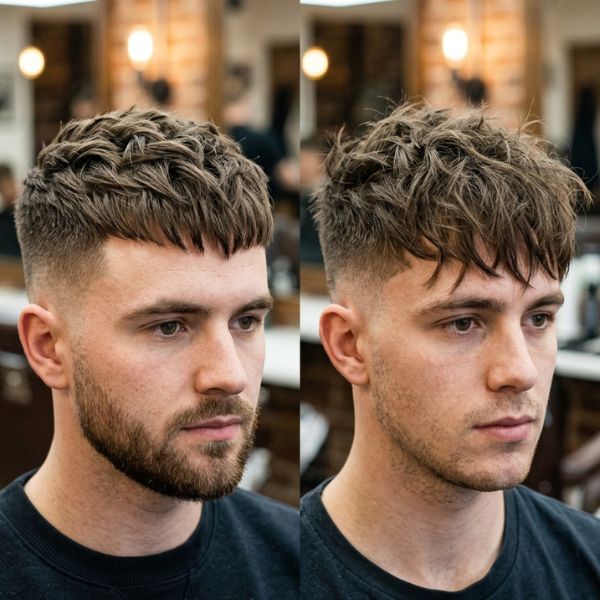
| Feature | Messy French Crop | Textured Crop |
| Fringe | Short, forward, blunt or broken | Short and high, choppy |
| Top length | Short to medium | Short to medium, often a bit longer |
| Main look | Rough, relaxed, forward | Layered, voluminous, natural |
| Styling effort | Very low | Low to medium |
| Best hair | Straight to wavy, medium density | Straight, wavy, curly, thick |
| Face shapes | Round, oval, long | Most shapes |
| Barber visits | Every 3 to 4 weeks | Every 4 to 6 weeks |
Key Differences Between the Messy French Crop Vs Textured Crop
The Fringe
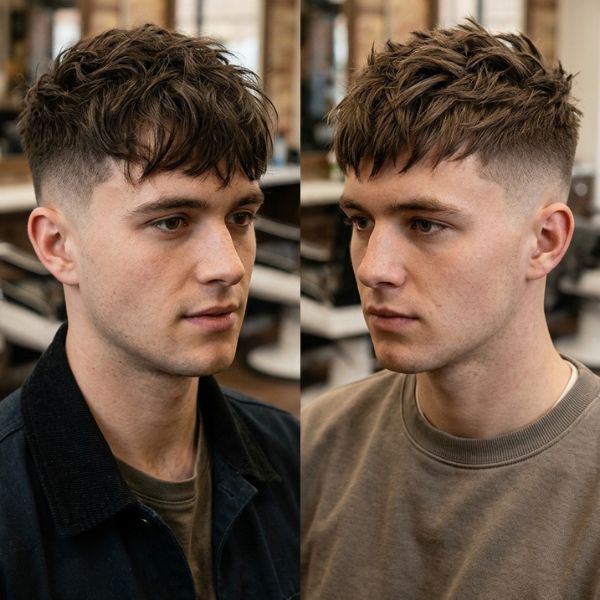
The fringe is the clearest difference. A messy French crop pushes the fringe forward and keeps it short, so it covers part of the forehead. The line can be blunt or broken, but the direction stays forward.
A textured crop treats the fringe as one piece of a layered top. It usually sits higher and moves in different directions. Luxe Digital also notes that the French crop fringe often runs longer, while the textured crop fringe stays choppy.
Architecture
Architecture means the way the barber builds the shape. The messy French crop is built around one line, the forward fringe. The rest of the top follows it.
The textured crop is built from internal layers. The barber removes weight from within the hair, so volume comes from the cut itself. This makes the textured crop more flexible if you want to change the styling direction.
Style
A messy French crop looks effortless and a little rebellious. It suits casual wear, creative jobs, and relaxed settings. You can push it forward with your fingers and leave the house.
A textured crop looks modern and polished while still moving naturally. It handles office wear, weekends, and events equally well. It also takes more product if you want a defined finish.
The Fade
Both cuts pair well with a fade, but the effect differs. On a messy French crop, a fade or taper makes the forward fringe stand out against the clean sides. A low taper keeps it softer, while a skin fade makes it sharper.
On a textured crop, a fade adds contrast between the tight sides and the layered top. A burst fade, which curves around the ear, suits curly textured crops well.
Read more: Low Taper Fade with Buzz Cut: Best Styles, Guard Sizes & Barber Tips
Overall Impression
The messy French crop gives you a strong, simple silhouette with a forward edge. The textured crop gives you volume and movement with a softer outline. If you want one clear shape, pick the French option. If you want flexibility, pick the textured one.
Which One Is Better Messy French Crop Vs Textured Crop for Your Hair Type?
Hair type matters more than trends. Match the cut to your natural texture and density, and daily styling becomes easier.
Straight Hair
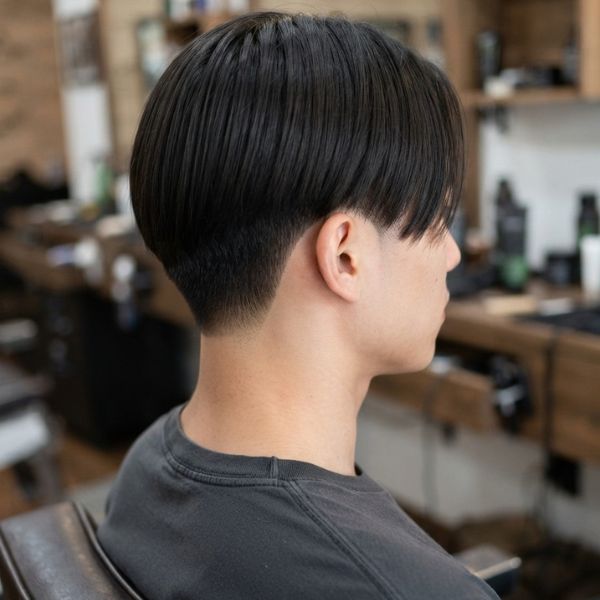
Straight hair holds a forward fringe very well, so the messy French crop looks clean here. Ask your barber to break up the ends so it does not look flat. A textured crop also works, but straight hair needs texture powder or clay to show the layers.
Wavy Hair

Wavy hair is the sweet spot for both cuts. Natural bends add the mess that the French crop wants. They also add the movement that the textured crop depends on. Air drying with a little sea salt spray is often enough.
Kinky Hair

Kinky or tightly coiled hair has strong natural volume. A textured crop with a taper suits it better, since the layers follow the curl pattern. A French crop can work if the fringe is kept slightly longer, so the curls have room to sit forward. Keep the hair moisturized to avoid dryness and frizz.
Thick Hair

Thick hair can feel bulky on top. A textured crop is the safer pick, because point cutting removes weight and stops the top from puffing up. A messy French crop works if the barber thins the fringe lightly.
Fine Hair

Fine hair can look flat. A short messy French crop adds an easy illusion of body, since the short length keeps hair from falling limp. A textured crop also helps if the layers are cut shallow. Avoid heavy waxes, which can weigh fine hair down.
What’s the Most Flattering Facial Shape?
Face shape affects how a haircut frames your features. Both cuts follow the same basic rule: add volume where the face is narrow, and keep it flat where the face is wide.
Broad Face
A broad or round face looks better with height and clean sides. Choose a textured crop with a taper or fade and lift the top upward. A messy French crop with a short fringe can also work, but avoid a heavy blunt line that widens the forehead.
Square Face
A square face has a strong jaw, so soft texture helps balance it. A messy French crop suits this shape well, since the rough fringe softens the angles. A textured crop is also a good match.
Oval Face
An oval face is balanced, so almost any cut works. This is the one face shape where you can choose purely on lifestyle and hair type.
Long Face
A long face benefits from a forward fringe that shortens the forehead. The messy French crop is a strong choice here. Keep the top at moderate height, since too much volume makes the face look longer.
Which is Easier to Keep Up With? Messy French Crop Vs Textured Crop
Both cuts are low maintenance, but they ask for different things.
- Daily styling: The messy French crop takes about two minutes. You apply a small amount of product and push the fringe forward. The textured crop takes a little longer, since you shape the layers.
- Barber visits: A messy French crop with a fade needs a visit every three to four weeks to keep the sides clean. A textured crop grows out more gracefully, so you can stretch visits to four to six weeks.
- Growing out: The textured crop hides growth better. A French crop fringe starts to touch the eyebrows quickly.
In short, the messy French crop wins on daily speed, while the textured crop wins on staying power between cuts.
Read more: 12 Top Trending Guard Buzz Haircuts for Men
Best Products for Messy French Crop Vs Textured Crop Haircuts
The right product depends on the finish you want. Use this list as a starting point.
- Matte clay: Gives strong hold with no shine. Best for the textured crop.
- Texture or sea salt spray: Adds grit to fine or straight hair. Good for both cuts.
- Texturizing powder: Adds lift at the roots. Useful for fine hair.
- Lightweight pomade or paste: Gives a rough, flexible finish. Ideal for the messy French crop.
- Blow dryer: Dry the fringe forward first, then add product. Daimon Barber’s French crop guide also suggests applying a small amount to damp hair before drying.
Use a pea sized amount and add more only if needed. Too much product is the fastest way to ruin either cut.
How To Talk with Your Barber
Clear words save you from a bad cut. Barbers read photos better than names, because “French crop” and “textured crop” mean different things in different shops.
Follow these steps:
- Bring two or three reference photos from the front and side.
- Name the fringe length, such as “short and forward” or “high and choppy.”
- Specify the sides, for example “low skin fade” or “mid taper.”
- Ask for point cutting on top, so the finish looks messy and not flat.
- Mention your hair type and your daily styling time.
A simple script: “I want a short, forward fringe with point cut texture on top, and a low taper on the sides. I only want to spend two minutes styling it.”
So Which One Do You Choose? Messy French Crop Vs Textured Crop
Choose based on your priorities, not on the trend.
Pick the messy French crop if you:
- Want the fastest daily routine
- Have straight to wavy hair
- Like a strong, forward fringe
- Have a long or square face
Pick the textured crop if you:
- Have thick or curly hair
- Want more volume and movement
- Prefer longer gaps between barber visits
- Want a cut that suits most face shapes
Public figures show how close the two styles are. Irish actor Cillian Murphy, known for Peaky Blinders, has worn a textured French crop. English actor Tom Holland, known for playing Spider-Man, has worn the classic French crop. Both examples are reported by Luxe Digital.
Read more: Low Taper Fade Styles for Straight Hair: Best Haircuts for Men
Mistakes to Avoid
Most bad results come from small errors.
- Skipping the reference photo: The name alone is not enough.
- Using heavy wax: It flattens the texture and makes hair greasy.
- Cutting the fringe too short: A fringe that sits too high loses the French crop effect.
- Ignoring hair density: Thick hair needs thinning, and fine hair needs lighter layers.
- Stretching fade visits: The sides lose shape quickly and the cut looks untidy.
- Styling dry hair only: Light product on damp hair gives better control.
Conclusion
The messy French crop and the textured crop share the same short sides and longer top, but they are not the same cut. The French version centers on a short, forward fringe with a rough finish. The textured version centers on layers, movement, and volume.
For quick styling and a bold fringe, choose the messy French crop. For thick or curly hair and slower grow out, choose the textured crop. Bring photos to your barber, describe the fringe and sides clearly, and use light product. Either way, you get a sharp, modern cut that works in 2026.
FAQs
Is a messy French crop the same as a textured crop?
No. A messy French crop is built around a short, forward fringe, while a textured crop is built around choppy layers across the whole top.
Which is better for thick hair?
A textured crop is usually better, since point cutting removes bulk and keeps the top from puffing out.
Which is better for fine hair?
A short messy French crop works well, since the short length adds easy body. Use light products only.
Does a messy French crop suit curly hair?
Yes. Curls add natural mess, but keep the fringe slightly longer so the curls sit forward.
How often should I get a trim?
Every three to four weeks for a French crop with a fade, and every four to six weeks for a textured crop.
What product should I use?
Use matte clay for a textured crop and lightweight paste or pomade for a messy French crop.
Which face shape suits a messy French crop?
Long, square, and oval faces suit it best, since the forward fringe shortens or softens the face.
Is the textured crop still popular in 2026?
Yes. Barbers still request it often because it works with fades, tapers, beards, and most hair types.

Reyansh is an experienced fashion writer with 6+ years of writing experience, passionate about fashion trends, styling ideas, and modern looks. He creates simple, engaging content that helps readers discover their personal style with confidence.