


Taper fade mullet haircuts blend a clean, gradual fade on the sides with longer, textured length at the back, giving you a modern take on a retro classic.
The cut works because the taper softens the old business in front, party in back look, so it feels sharp instead of costume-like.
It suits straight, wavy, curly, and coily hair, and it adapts to teens, adults, and even kids with the right adjustments.
This guide covers the main variations, hair type matches, barber instructions, styling steps, maintenance timing, and honest comparisons with other cuts, so you can walk into the chair knowing exactly what to ask for.
What Is a Taper Fade Mullet?
A taper fade mullet is a mullet where the sides and neckline are gradually shortened with clippers, while the top and back keep more length.
The fade removes the harsh, blocky join of the 1980s version and replaces it with a smooth blend. Barbers often call it a modern mullet or a mullet fade.
The Basic Parts of the Haircut
Every version of this cut has the same building blocks. Knowing them makes talking to your barber much easier.
- Top: Can be short and textured, medium and swept, or long and layered.
- Sides: Tapered or faded from short to longer as they move up the head.
- Back: The mullet section. It can be a small tail or a long, flowing length.
- Neckline: Tapered, rounded, or left natural for a grown in look.
- Transition zone: The area where the fade meets the longer hair. A good blend here is what makes the cut look professional.
Why This Cut Is So Popular
The taper fade mullet gives you personality without looking messy. The fade keeps the sides tidy, so the longer back reads as a choice, not neglect. Social media has also pushed the style, because it photographs well from every angle.
Here are the main reasons men keep choosing it:
- It looks bold but stays polished enough for most workplaces.
- It works with many hair textures.
- It grows out gracefully, which removes the awkward stage many mullets had.
- It is easy to adjust, from subtle to dramatic.
- It pairs well with beards, stubble, and clean shaven faces.
Types of Taper Fade Mullet Styles
The style you pick depends on how high you want the fade, how much contrast you like, and how long you want the back.
Low Taper Fade Mullet
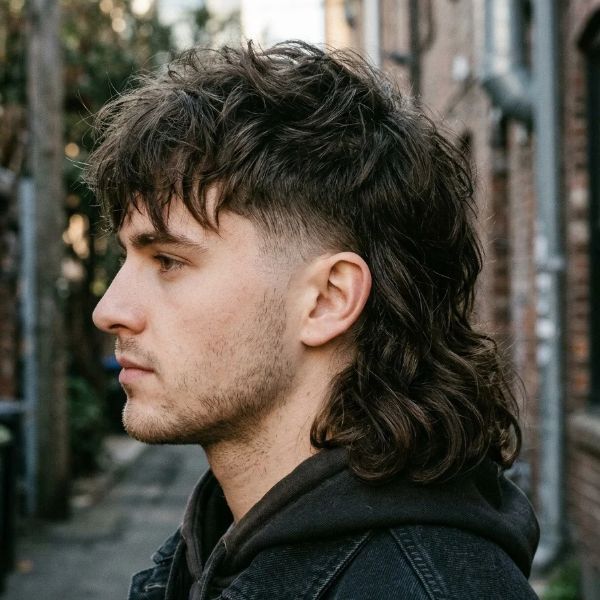
The fade sits close to the ears and neckline. It is the safest choice for a first mullet and the easiest to grow out.
Mid Taper Fade Mullet

The taper starts around the temples and moves down. It gives balanced contrast and is the most requested height.
High Taper Fade Mullet
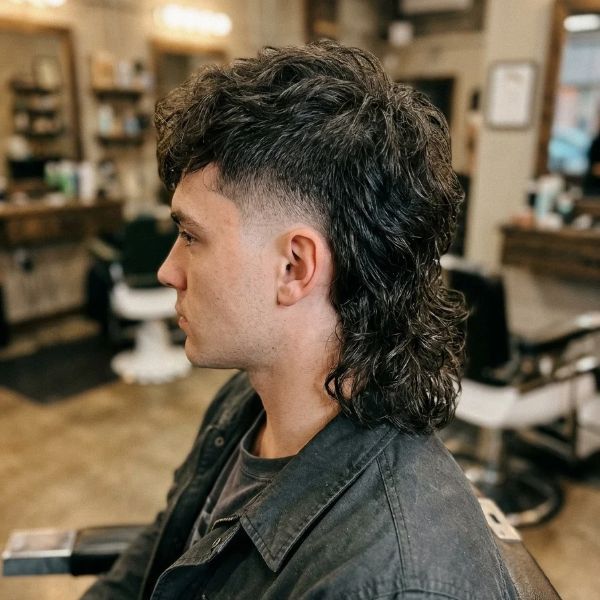
The fade begins high on the head, which creates strong contrast with the longer top and back. It suits confident, bold looks.
Skin Taper Fade Mullet
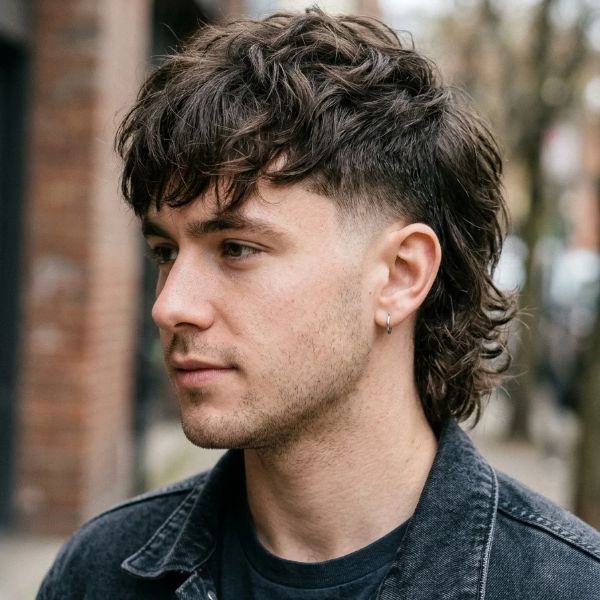
The sides fade down to bare skin. This gives the cleanest, sharpest finish but needs the most frequent upkeep.
Burst Taper Fade Mullet
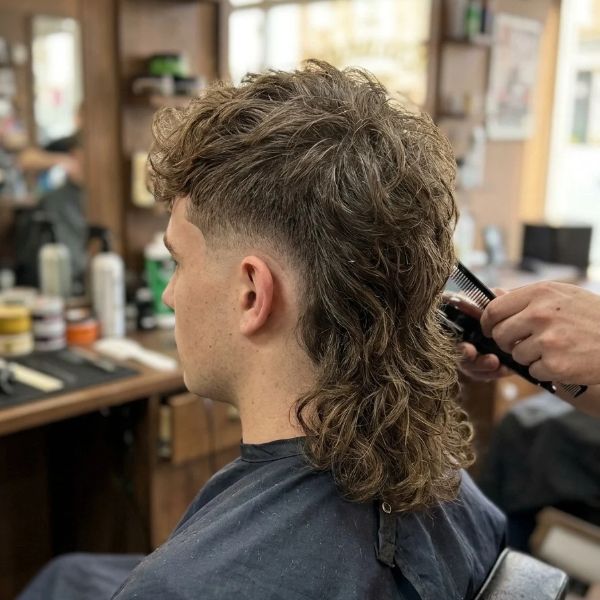
The fade curves around the ear in a semicircle, while the back stays long. It is popular with curly and coily hair because it frames the curls neatly.
Textured and Fluffy Taper Fade Mullet
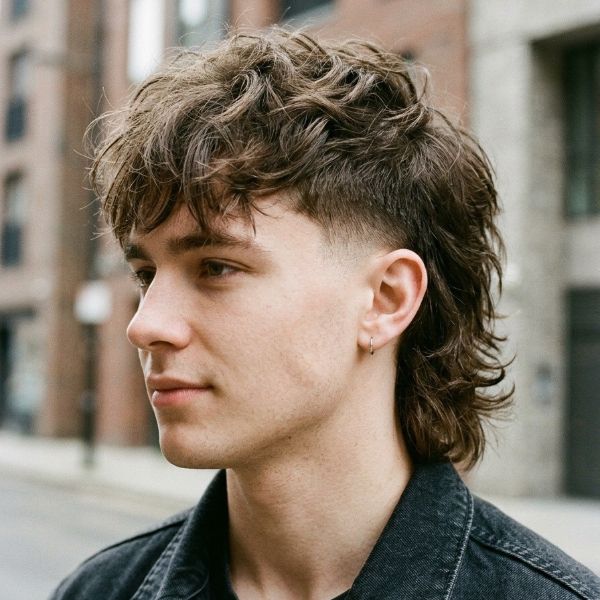
Layers and light texturizing create volume on top and a soft, airy back. Sea salt spray or light cream works well here.
Messy Taper Fade Mullet
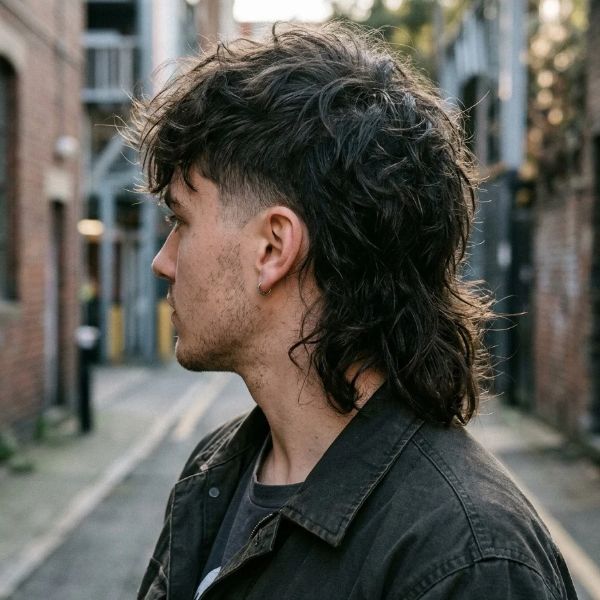
The top is tousled with a matte product for an effortless look. It is a good fit for casual styling.
Disconnected Taper Fade Mullet
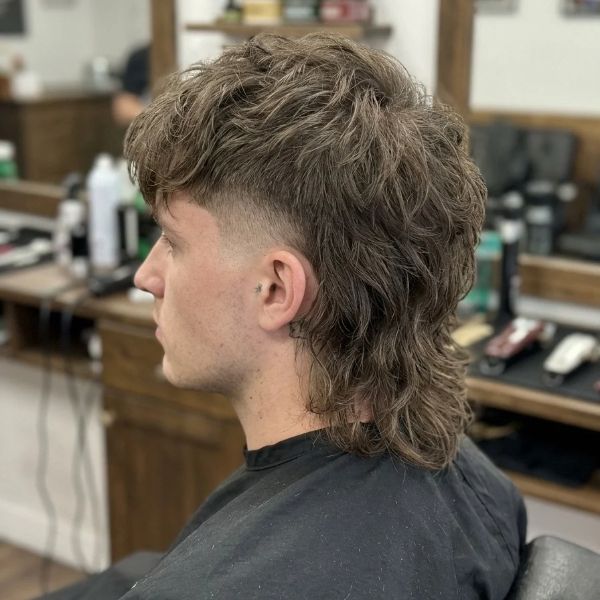
There is a visible gap between the short sides and the long top and back, with no gradual blend. It makes a bold statement.
Shag Mullet Taper Fade

Heavy layering adds a rock and roll feel, with choppy ends on top and at the back.
Mohawk Taper Fade Mullet
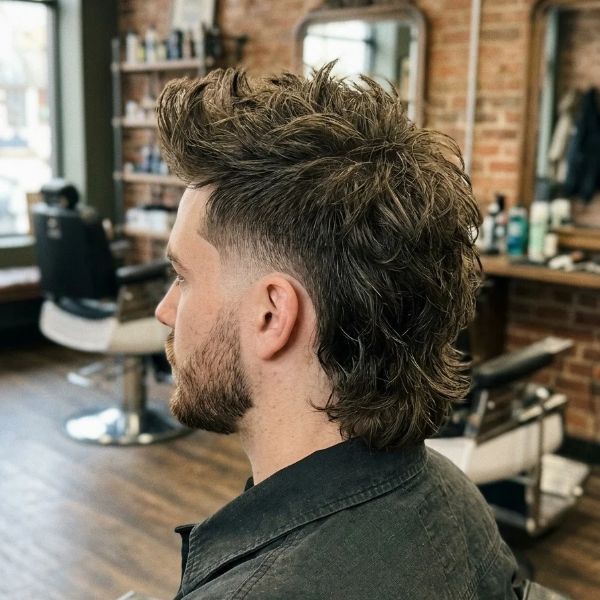
The sides are tapered tight while a strip of longer hair runs from front to back. It is dramatic and best for people who like attention.
Slick Back Taper Fade Mullet
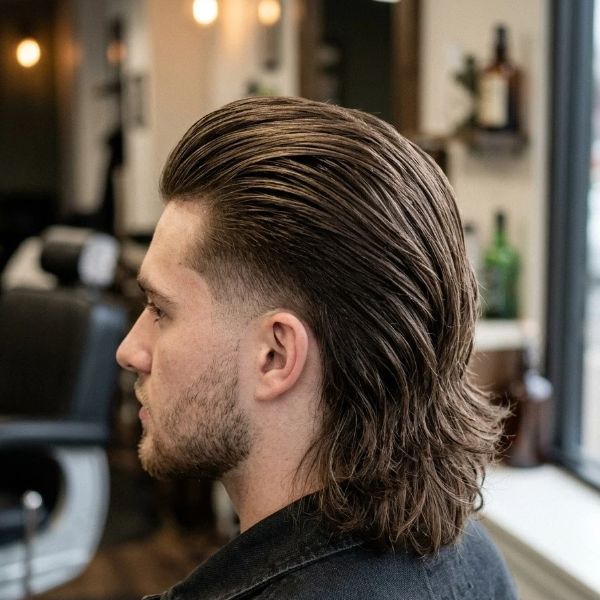
The top is combed back with pomade or gel and flows into the mullet length. It looks refined and works for formal settings.
Classic Taper Fade Mullet
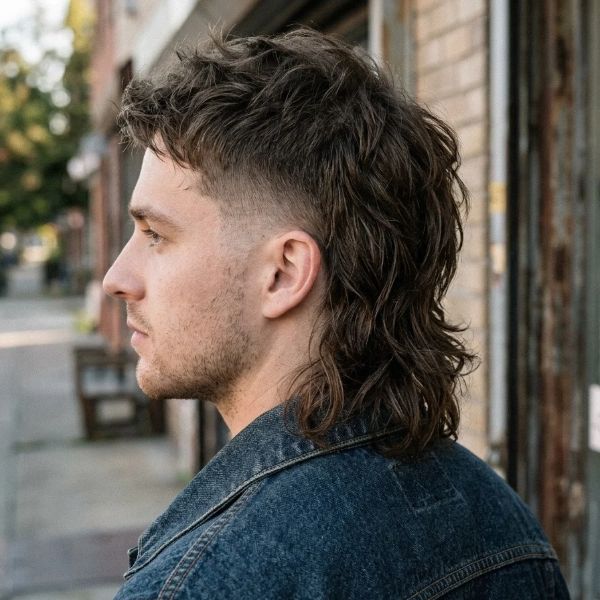
This is the standard version: moderate top length, a clean taper, and a medium back. It is a reliable default.
Trending Cuts: Edgar Mullet, Mexican Mullet, and Wolf Cut Mullet
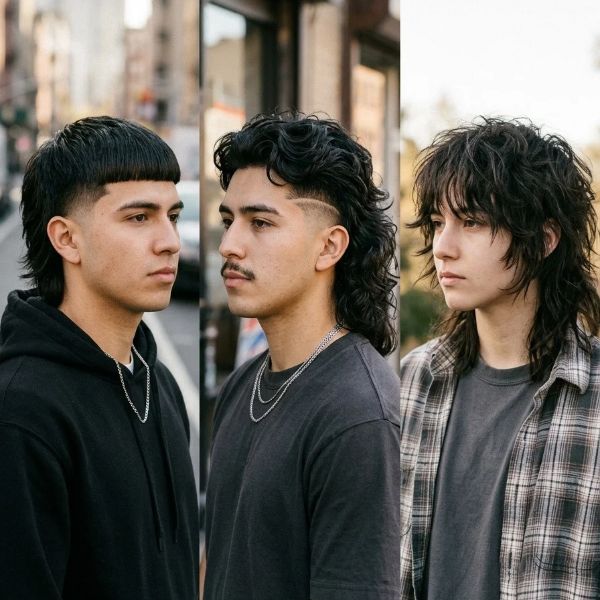
The Edgar mullet pairs a blunt fringe with a sharp fade and a short tail. The Mexican mullet often features a clean skin fade with a longer, smooth back. The wolf cut mullet adds heavy layers for a wilder shape. All three sit under the same taper fade mullet umbrella.
Best Mullet Fade by Hair Type
Hair texture changes how the cut falls, so match the style to your natural pattern.
Curly Taper Fade Mullet

Curls add built in volume. A burst or mid taper keeps the ears clean while the curls stay full on top. Use a curl cream to control frizz.
Wavy Taper Fade Mullet
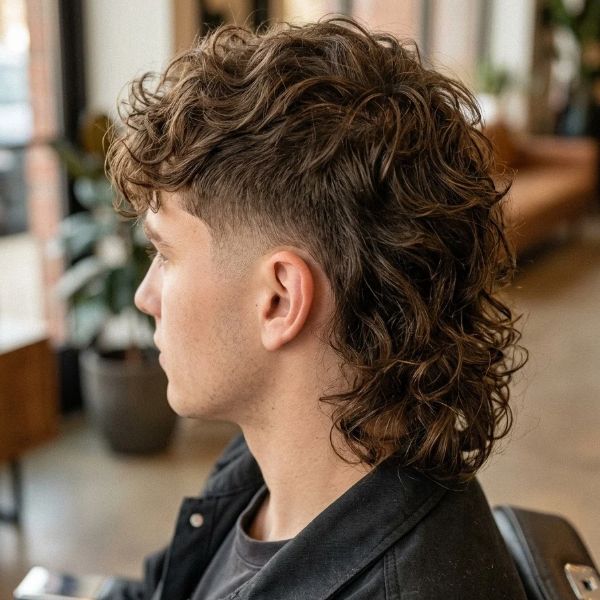
Waves give natural movement, so a textured, layered mullet looks effortless. A low or mid taper is usually enough.
Straight Hair Taper Fade Mullet
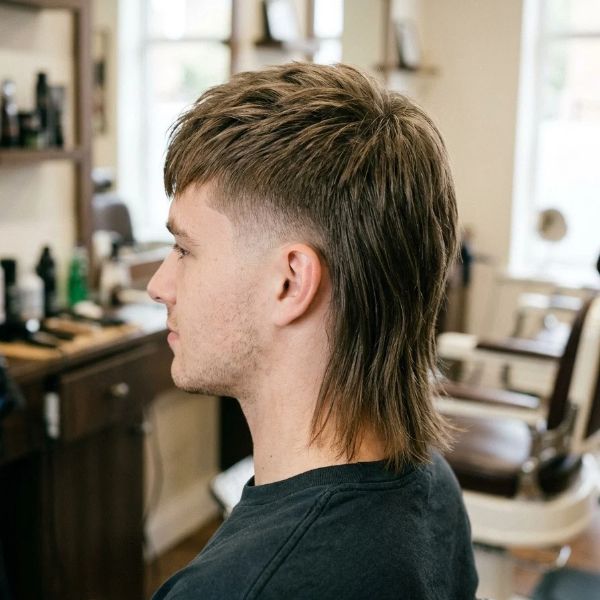
Straight hair shows clean lines clearly. Add layers and use texture spray, or the back can look flat.
Thick Hair Taper Fade Mullet

Thick hair needs thinning and layering to avoid bulk. A mid or high taper removes weight from the sides.
Thin Hair Taper Fade Mullet
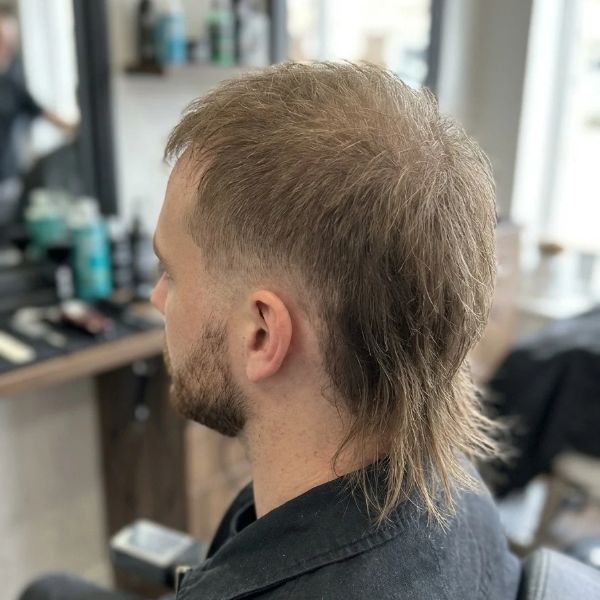
Keep the back shorter and use volumizing powder. A low taper helps because it preserves density.
Afro and Coily Taper Fade Mullet

Coily hair holds shape well. A skin or burst fade makes the longer top and back stand out sharply.
Black Men’s Taper Fade Mullet
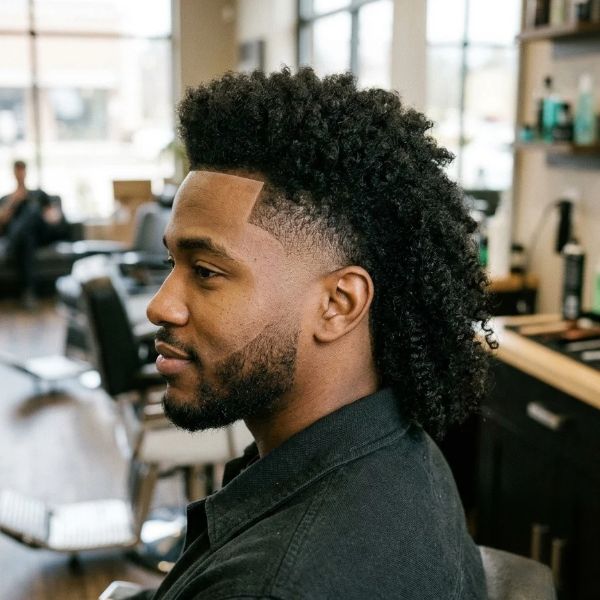
Many Black men choose a clean skin or burst taper with twists, curls, or a shaped afro at the back. A crisp lineup adds polish.
Asian Taper Fade Mullet
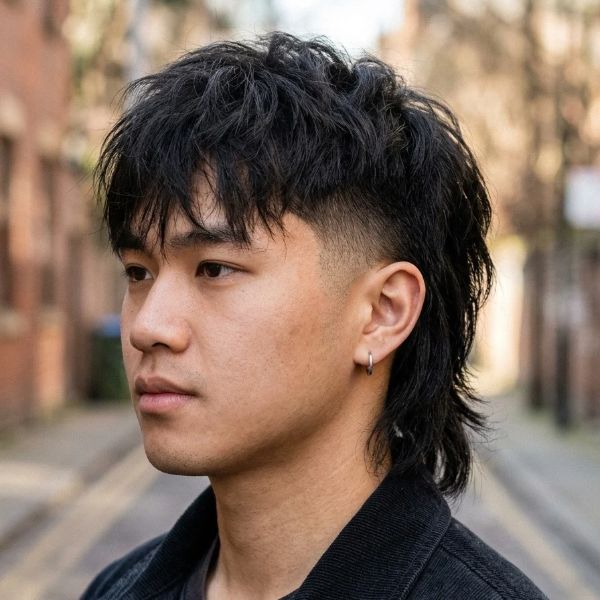
Asian hair is often straight and dense. Layering and thinning shears help the mullet move naturally instead of sitting heavy.
Who Suits a Taper Mullet?
This cut works for most face shapes if the proportions are right. Here is a quick guide to what tends to flatter each shape:
- Oval: Almost any version works.
- Round: Add height on top and keep the sides tight.
- Square: Softer layers balance a strong jawline.
- Heart: Keep the top lighter and let the back carry some weight.
- Long: Avoid too much height. Choose more side volume or a shorter top.
Personality matters too. If you like a low fuss, expressive look, this cut will probably feel natural on you.
Taper Fade Mullet for Every Age Group
Taper Fade Mullet for Men
Grown men tend to choose low or mid tapers with moderate length. It looks stylish without being extreme, and it pairs well with a trimmed beard.
Taper Fade Mullet for Young Men
Young men often go bolder with burst fades, textured tops, or longer tails. It is a good age to experiment.
Taper Fade Mullet for Teenagers
Teens usually like trend led versions such as the wolf cut mullet. Check school rules first, since some limit extreme fades.
Taper Fade Mullet for Boys and Kids
Keep it simple with a low taper and a short, soft back. Kids need a comfortable cut that is easy for a parent to maintain.
How to Ask Your Barber for This Cut
Clear instructions prevent most haircut disasters. Follow these steps.
Step 1: Choose Your Fade Height
Say low, mid, or high taper. If unsure, start low, because you can always go higher later.
Step 2: Pick a Fade Style
Decide between a standard taper, a skin fade, or a burst fade. Each gives a different shape around the ears.
Step 3: Decide on Top Length and Texture
Tell your barber how long the top should be and whether you want layers, texture, or a smooth finish.
Step 4: Explain the Back Length
Use your fingers to show how far down you want the back. Words like “short” or “long” mean different things to different people.
Step 5: Bring Reference Photos
Pictures from several angles show the exact blend you want. Choose photos of hair similar to your own texture.
Step 6: Ask for a Consultation First
A quick chat lets the barber check your hairline, cowlicks, and density before cutting.
Step 7: Communicate During the Cut
Speak up if the fade is getting higher than you wanted. Most barbers prefer feedback while they can still adjust.
Tutorial: How to Style Tapper Fade Mullet
Good styling takes about five minutes once you know the routine.
Step 1: Start With Clean, Towel-Dried Hair
Wash and towel dry until the hair is damp, not dripping. Product spreads more evenly this way.
Step 2: Apply the Right Product
Use sea salt spray for texture, cream for curls, matte clay for a messy finish, or pomade for a slick look.
Step 3: Work Product Through the Top First
Run your fingers from front to back, shaping the top the way you want it to sit.
Step 4: Shape the Back
Smooth or scrunch the back section with a little product. Let it fall naturally for a relaxed look.
Step 5: Blend the Sides
Press the tapered sides flat with your palms so they stay tidy against the longer hair.
Step 6: Finish With a Light Hold Spray
A flexible spray keeps the shape without stiffness.
Step 7: Adjust Throughout the Day
Touch up with your fingers. Avoid adding more product, which can weigh the hair down.
Maintenance Guide
The longer sections need less upkeep than the faded sections, which grow out quickly. Plan your barber visits around the fade.
The table below shows a typical schedule.
| Fade Type | Trim Frequency | Upkeep Level |
|---|---|---|
| Low taper | Every 4 to 5 weeks | Low |
| Mid taper | Every 3 to 4 weeks | Medium |
| High taper | Every 2 to 3 weeks | Medium to high |
| Skin taper | Every 2 weeks | High |
| Burst taper | Every 3 weeks | Medium |
Skin and high fades lose their sharpness fastest because the contrast shows regrowth quickly. A low taper stays presentable longer, which makes it the practical choice for busy schedules. Between cuts, wash with a mild shampoo, condition the longer sections, and trim split ends every few months to keep the back healthy.
Taper Fade Mullet vs. Other Popular Cuts
Taper Fade Mullet vs. Burst Fade Mullet
The taper version follows the natural hairline, giving a subtle finish. The burst version curves around the ear and has a more dramatic shape.
Taper Fade vs. Fade
A taper shortens hair gradually, mostly at the neckline and sideburns. A fade goes much shorter, often to the skin, and covers more of the head.
Taper Fade vs. Low Fade vs. High Fade
The table below compares these three common options.
| Feature | Taper Fade | Low Fade | High Fade |
|---|---|---|---|
| Starting point | Hairline edges | Just above the ear | High on the temple |
| Contrast | Soft | Medium | Strong |
| Best for | Natural looks | Balanced style | Bold looks |
A taper is the most conservative option, while a high fade gives the sharpest contrast. The low fade sits between them, which is why it suits men who want something noticeable but not extreme.
Burst Fade vs. Taper Fade
A burst fade is shaped like an arc around the ear, while a taper follows the edges of the hairline. Burst fades suit curls, and tapers suit most textures.
Mullet vs. Wolf Cut
A mullet is short at the front and sides and long at the back. A wolf cut uses heavy layers all over for a shaggier, more even shape.
Mullet vs. Taper Haircut
A taper haircut is a short, neat style with no extra length. A mullet keeps length at the back, so it needs more styling and a bit more confidence.
Is It Attractive and In Style?
Yes, when it is well cut and suits your face shape. Many men find the cut attractive because it shows confidence and creativity. The fade adds neatness, which keeps the look balanced. In 2026 the style remains a regular choice in barbershops and on social media.
Attractiveness depends on execution. A smooth blend, healthy hair, and a length that fits your features matter more than the trend itself.
Before and After: What to Expect
The change is clear from the first visit. Before the cut, hair often looks heavy or shapeless. Afterward, the sides are cleaner and the top has more structure.
Here is what usually happens in the weeks after your cut:
- Day one: The fade is crisp and the shape is at its cleanest.
- Week two: The sides begin to soften and regrowth appears.
- Week four: The blend loses definition and the back lengthens.
- Week six: A fresh trim is needed to restore the shape.
Expect a short adjustment period while you learn your styling routine. Most men feel comfortable with it after two or three washes.
Frequently Asked Questions
What is a taper fade mullet?
It is a mullet with tapered or faded sides and a longer back. The fade creates a smooth, modern blend.
How do I ask for a taper fade mullet at the barbershop?
Name the fade height, the top length, and the back length. Bring photos to make sure you and your barber agree.
How often do I need a trim?
Most men need a trim every 3 to 5 weeks. Skin and high fades need visits closer to every 2 weeks.
Can I get this cut with curly hair?
Yes, curly hair suits it very well. A burst or mid taper keeps the sides neat while the curls stay full.
Is a taper fade mullet good for a first-time bold haircut?
Yes, especially a low taper version. It is subtle, grows out neatly, and is easy to adjust.
Final Thoughts
The taper fade mullet works because it combines two opposite ideas: discipline on the sides and freedom at the back. Whether you choose a low taper, a burst fade, or a textured shag, the right version can match your hair type, age, and daily routine.
Start with clear instructions, bring references, and keep up with regular trims. With a little care, this cut will look sharp, current, and unmistakably yours.

Reyansh is an experienced fashion writer with 6+ years of writing experience, passionate about fashion trends, styling ideas, and modern looks. He creates simple, engaging content that helps readers discover their personal style with confidence.